

Career Readiness Research Videos
Recently, the Illinois P-20 Network hosted two webinars as part of the Research Webinar Series. Both of these free webinars featured recent Northern Illinois University College of Education doctoral graduates whose dissertations focused on topics related to career readiness.
Joe Bruno focused his research on student motivation and career and technical education (CTE) course selection. Joe’s webinar can be viewed in full on our YouTube channel and below.
Amanda Pelsor focused her research on district-level career readiness implementation in school districts across Illinois. Amanda’s webinar be viewed in full on our YouTube channel and below.
Student Motivation and CTE Course Selection – Dr. Joe Bruno
Career Readiness Implementation across Illinois – Dr. Amanda Pelsor
Webinar – Dual Credit and Weighted Grades v2
During the latter part of the fall and early this winter, we shared a survey statewide regarding current high school weighted grade practices with regards to dual credit coursework. The survey data has been analyzed, and we are excited to host a webinar in collaboration with ILACEP to share these results. The webinar will be held on Tuesday, February 17 at 1 PM. The webinar is free, and you are encouraged to share with colleagues!
January 2026Building Our Statewide Community – Illinois Education Podcasts
For nearly twenty years, the Illinois P-20 Network team has been avid listeners of podcasts, and in preparing this week’s Newsletter, we were excited that a new episode, the first of the 2025-2026 school year, dropped into our podcast apps from Vienna High School – The Better than Detention podcast.
One of the most profound aspects of working as part of the Illinois P-20 Network is the strong sense of community among educators in Illinois, and we had the thought, ‘How cool would it be to collect all of the podcasts being created in schools and postsecondary institutions and to share that list back statewide?’
So, this is a very simple, very quick (3 questions only) call-to-action: Does your organization have a podcast? It can be on any topic from academics to the arts to athletics (to pop culture, politics, or more)! Podcasts can be student-generated (awesome!) or created by staff. If so, tell us about it and drop the link into this short form, and we’ll share this list out this Fall! Please forward this to others in your organization and throughout your region.
August 2025Hawthorn 73 – Instructional Coaching: A Partner in Your PLC
This post was written by Allison Stein, Assistant Superintendent of Teaching and Learning at Hawthorn Community Consolidated School District 73. In this post, Allison outlines the district’s instructional coaching program, which they call A Partner in Your PLC.
During the 2022-2023 school year, we were presented with an exciting opportunity to design and implement a comprehensive instructional coaching program. In doing so, we prioritized setting a clear purpose focused on promoting the growth and learning of all students. Diane Sweeney’s Student-Centered Coaching Cycle, with its laserlike focus on student-learning, became the foundation of our work. We paired key components of Sweeney’s framework with an emphasis on developing our teacher teams into professional learning communities (PLCs). In our resulting model, instructional coaches are charged with promoting high levels of learning for all students through the facilitation of student-centered coaching cycles that follow the PLC process.
At the start of our instructional coaching cycle, a coach partners with a grade level or department PLC to identify one or more standards-based student learning objectives. Importantly, these learning goals are selected from our district’s Guaranteed and Viable Curriculum and are not related to teacher performance. Our coach then supports the teacher team in analyzing students’ pre-assessment data to inform instructional planning. They engage in co-planning and co-teaching with team members throughout the unit of study, administering a variety of formative assessments to monitor student mastery of the agreed upon learning objectives. At the end of a cycle, both the instructional coach and teaching team participate in a structured reflection to support professional learning and continued program improvements.
Each of our instructional coaches uses an Instructional Coaching Cycle Tool (ICCT) to facilitate cycles with teams. Our ICCT is designed to follow the PLC process; components are color-coded with guiding questions to support teams in responding to the four PLC questions. This highly structured tool supports consistency in our coaching processes and practices. It also helps us track student learning data to inform instruction, identify effective instructional strategies, explore areas of strength or needed development across the district, evaluate the impact of our coaching program, and ensure transparency around student learning. All team members, the coach, and the school administrator have access to the ICCT throughout a given cycle, as student growth is a shared responsibility.
Approximately once each month, our instructional coaches and department coordinators engage in an extensive data dive. Working as an instructional coaching PLC, we compile and analyze data to make any needed adjustments to our program and practices. Data points include qualitative and quantitative information from each of our ICCTs, as well as time studies from every member of our coaching team. That is, we track our professional activities to ensure time is dedicated to efforts that reflect our purpose: the growth and learning of all students. In addition, our instructional coaches participate in a robust, district-led Instructional Coaching Summer Institute at the start and end of each school year. These professional learning experiences provide our coaches with an excellent avenue for collaborative reflection, development, and planning.
Now in our third year, we are excited about the success of our instructional coaching program. Team members have presented at local coaching networks and conferences, showcasing our cycles and other coaching initiatives. We love learning and sharing with colleagues and would enjoy connecting with you! Please visit us at www.hawthorn73.org.
March 2025The Road to Retention KEEP Illinois Report Released
This week, KEEP Illinois met to review the now released report, The Road to Retention: Understanding the educator shortage and ways to engage and keep educators. This report reviews the existing literature on educator retention and engagement as well as state and national data. The report also makes recommendations regarding both policies and practices that can enhance educator engagement (and, ultimately, retention).
During the KEEP Illinois meetings, participants discussed which recommendations should be priorities as well as which are most realistic. Following those discussions, KEEP Illinois participants will receive a short follow-up survey. Based on those survey results and the discussions, a KEEP Illinois action plan will be put into place and future efforts will focus on implementing policies and practices across Illinois that are likely to increase engagement for all educators so they can continue to thrive throughout their careers. The video included below provides a brief overview of the full report.
To stay up-to-date on what is taking place with KEEP Illinois, please visit the Illinois P-20 Network’s KEEP Illinois website and watch for upcoming Illinois P-20 Network Newsletters.
October 2024Dual Credit Think Tank – Legislative Priorities Survey Update
This week, the Dual Credit Think Tank met and reviewed the data that resulted from the Legislative Priorities Survey that was launched following the August 1 Legislative Update Webinar. The survey sought to identify which topics related to HB5020 were most important to the field. Once those topics were identified, the goal would be to relaunch dialogue on these topics among interested and diverse groups of practitioners from school districts and postsecondary institutions to try to arrive at compromise and consensus.
During this week’s Dual Credit Think Tank meetings, participants collaborative analyzed the data. They sought to identify what patterns emerged in the data and which topics respondents felt were most important for further discussion (including identification of the evidence that supported these topics).
As this Newsletter goes out, the Illinois P-20 Network team is reviewing the responses from Dual Credit Think Tank participants and identifying action steps, which will be communicated to Think Tank participants in the coming weeks. To stay up-to-date on what is taking place with the Dual Credit Think Tank, please visit the Illinois P-20 Network’s Dual Credit Think Tank website and watch for upcoming Illinois P-20 Network Newsletters.
October 2024Launching Partner Plus – Join Us Today!
Since its inception ten years ago, participation in the Illinois P-20 Network has been free to participating organizations. Financial support for the Illinois P-20 Network has been provided by Northern Illinois University (NIU) and the NIU Division of Outreach, Engagement and Regional Development. For a period of time more than five years ago, there was additional funding from the Illinois Community College Board, and the Illinois P-20 Network has funded specific projects with contracts and grants from state agencies as well as by providing custom partner services on a fee-for-service basis to school districts and postsecondary institutions.
Over the past five years, demand for the knowledge and expertise provided by the Illinois P-20 Network has grown significantly. As a result, the Illinois P-20 Network seeks to meet that increasing demand with increasing capacity while also maintaining expert levels of knowledge and high-quality service. From answering questions via email to setting up short Zoom meetings on topics ranging from career and college readiness to educator engagement to instructional coaching to instruction and assessment, we are excited to partner with organizations across Illinois. Having a consistent revenue stream to support this work is critical for the sustainability of the Illinois P-20 Network and will help us meet increasing demand in these and other areas of need.
To continue (and expand) the current efforts of the Illinois P-20 Network, today we are launching Partner Plus. This is not only an opportunity to support the Illinois P-20 Network – but it also offers specific benefits for your organization.
August 2024Career Pathways Virtual Trailheads – Schan Willis – Radon Mitigation Technician and Business Owner
Originally launched during the COVID-19 Pandemic when students could not engage in face-to-face or on-site work-based learning experiences, the Career Pathways Virtual Trailheads video series brings people from a wide range of occupations to students remotely to learn about their careers and the competencies necessary for success.
In this Career Pathways Virtual Trailheads episode, we interview we interview Schan Willis, Radon Mitigation Technician and the owner of Clean Air Radon Systems in Naperville. Schan is a graduate of (the formerly named) Wheaton Central High School, Wheaton, Illinois. In 2000, Schan graduated from Columbia College Chicago, earning a B.A. in Communications, Marketing, and Advertising.
After graduating from Columbia College, Schan worked in various fields, but in 2012, he became interested in radon mitigation. He interned with a local radon mitigation business he had previously worked for in 1994. In 2014, Schan earned his radon mitigation license, and in 2017, he launched his company, Clean Air Radon Systems. He was able to use his degree in Communications, Marketing, and Advertising to promote his business. Schan’s focus is ensuring that homeowners have a safe home free from radon while installing systems that do not take away the beauty of their homes.
In this video, Schan shares his unconventional path to becoming a Radon Mitigation Technician and owning his own business. Schan talks about the importance of effective communication, advertising, creating a referral base, and networking. He also emphasizes the importance of planning and organizing, accountability and responsibility, problem-solving, self-motivation, and adaptability. He notes that becoming a radon mitigation technician does not require a college degree but that his degree has been very valuable in running his business.
Schan’s work as a business owner is part of the Finance and Business Services Career Pathway.
To keep up-to-date as new Career Pathways Virtual Trailheads videos are released, subscribe to the P-20 Network YouTube Channel.
April 2024HB5020 – Share your expertise | Impact the process
UPDATE – 21-March-2024 – 11.05 AM – The Illinois P-20 Network understands that HB5020 will no longer be called before the Higher Education Committee later today. Rather, additional work is likely to take place with various stakeholders as a next step. As the Illinois P-20 Network receives additional updates, those will be communicated to the Dual Credit Think Tank and to the field. Additionally, throughout this process, the Illinois P-20 Network will continue to engage and encourage the involvement of educators from both school districts and postsecondary institutions to put into place the best possible solutions for our collective students.
Tomorrow, Thursday, March 21, 2024, at 4 PM, HB5020 (See this previous HB5020 post for more information) is scheduled for a hearing with the Higher Education Committee. In advance of this, educators and other members of the public can file witness slips to share their expertise and to impact the legislative process. Witness slips allow members of the public to file in support of a bill, in opposition of a bill, or one can even file a neutral witness slip.
The purpose of sharing this is two-fold. First, dual credit is one critical element of our focus on Career and College Readiness, and the Dual Credit Think Tank has been actively working in this area for over four years alongside ILACEP and other key stakeholders who seek to improve dual enrollment and early college opportunities for students. The Illinois P-20 Network takes no position in favor of or in opposition to HB5020. Rather, our primary objective in sharing this is to ensure that practitioners impact policy outcomes.
One critical function of the Illinois P-20 Network is to ensure that the voices of practicing educators are able to be part of legislative and policymaking processes in order to support our goal of implementing engaging and effective assessment and instructional strategies for all learners.
To complete a witness slip, visit the Illinois General Assembly’s HB5020 web page, and follow the steps listed below. Again, a witness slip can and should be completed any time up to when the hearing ends, and it is a critical way for the expert voices of educators to influence the policymaking process.
When you first are on the General Assembly’s web page for a specific piece of legislation, you will notice that you have access near the top of the page to the full text of the legislation. Additionally, any sponsors of the legislation are listed, and just below that, highlighted in the image below, any upcoming hearings for this piece of legislation are also listed.
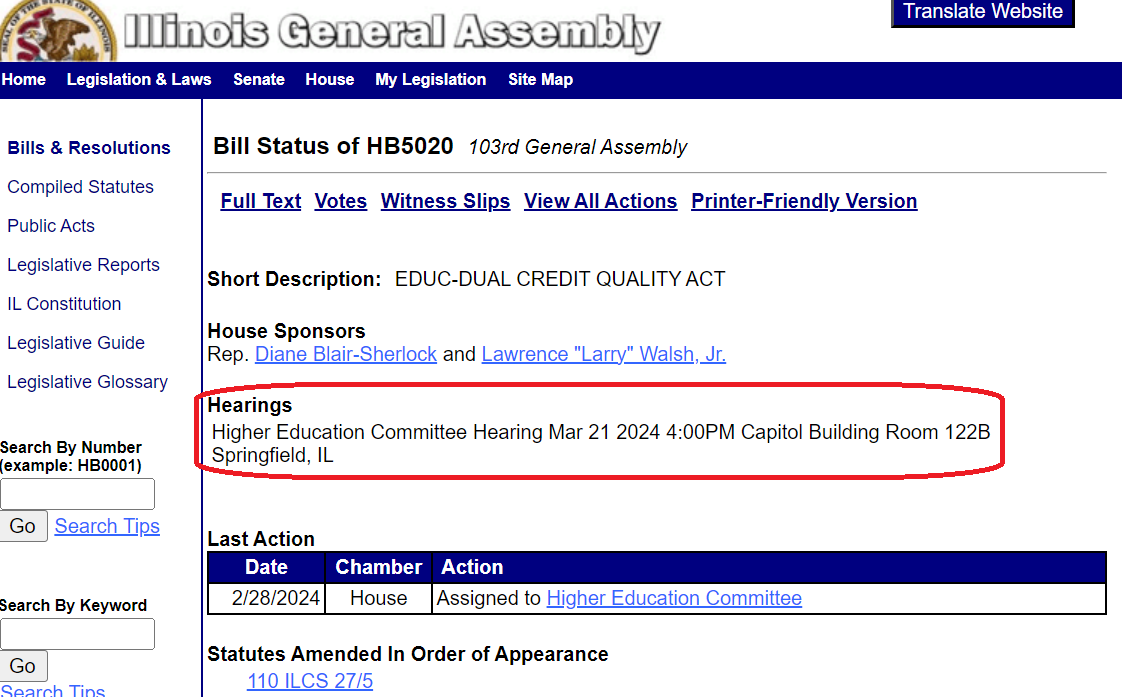
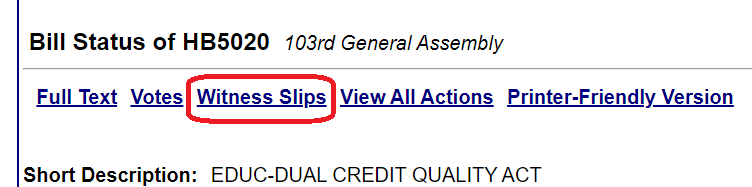
There are a series of steps that a user needs to click through in order to actually create a witness slip. These apply not only to HB5020 but to all bills introduced in the Illinois General Assembly. The first step is to click the “Witness Slips” link near the top of the page.
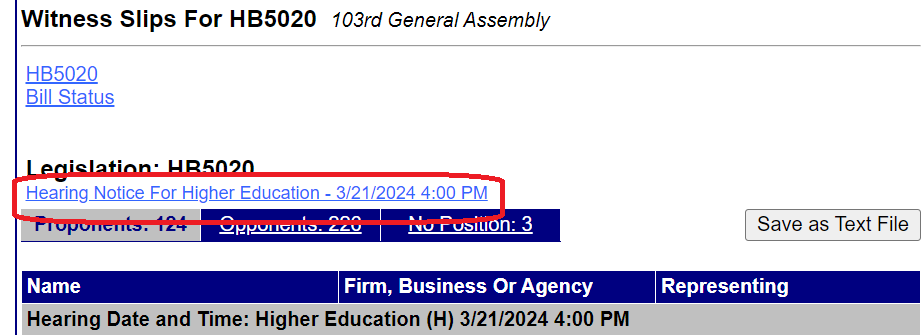
On the next page that loads, you can see who has issued witness slips in support of the bill, in opposition to the bill, and with no position. Near the top of this page, there is a link that you should click on to continue to move through the process to create your own witness slip.
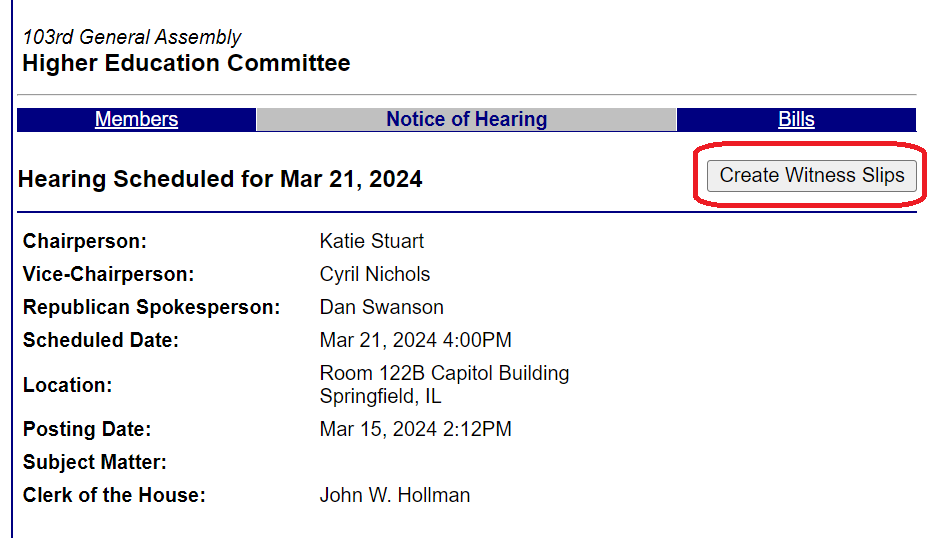
On the next page, click the “Create Witness Slips” button on the right side of the web page as pictured below.
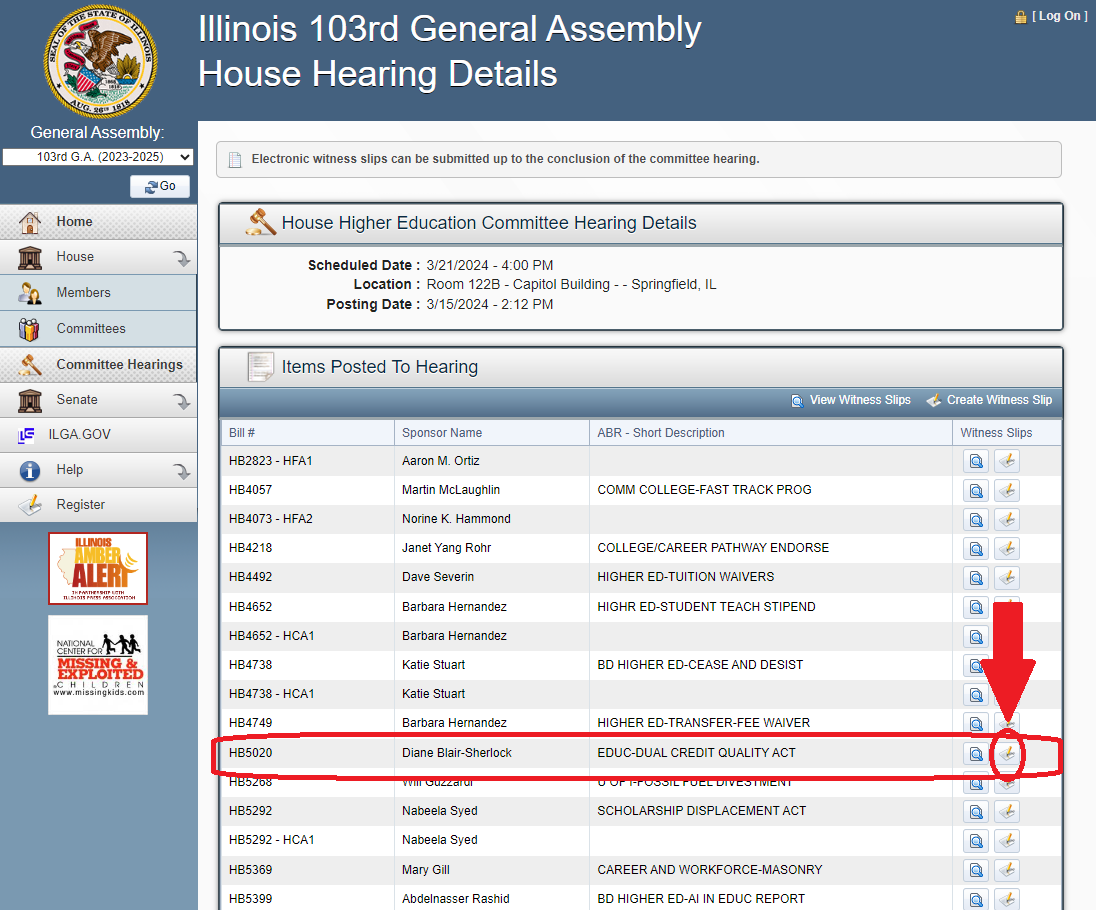
Now, a completely new website will load in your browser with an entirely different appearance. On this page, you need to find the bill on which you want to leave a witness slip. Once you have identified that bill’s row, you will click the icon on the far right of the row to create your own witness slip. (That button is circled in the image below.)
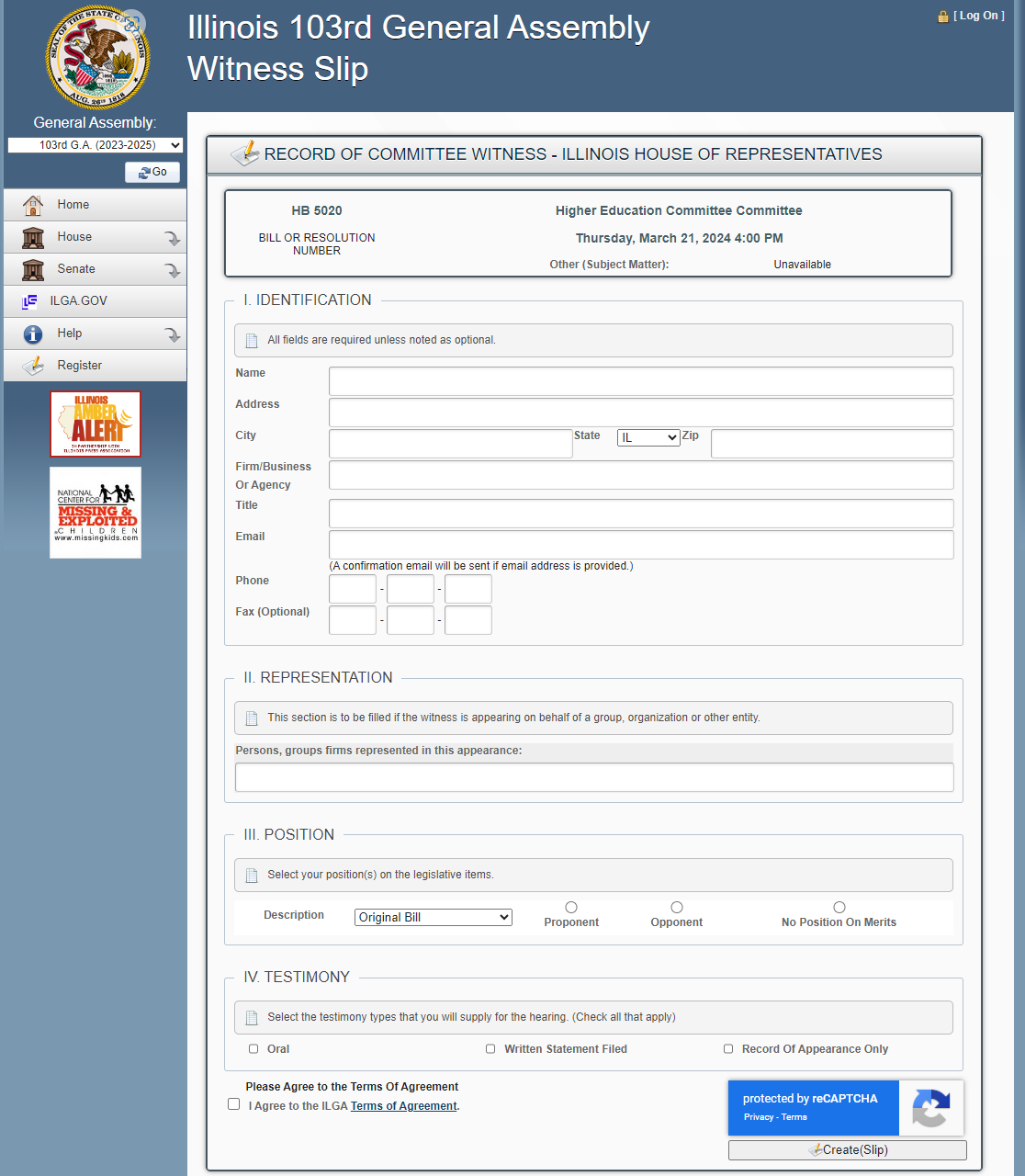
The Witness Slip form will now open. Complete this entire form. Be sure to provide your context and expertise. If you have data, include that data (while, obviously, protecting the privacy of personally identifiable information). Before you can submit, you do need to check the checkbox in the lower left corner in order to agree to the terms of the site before you can submit.
Career Pathways Virtual Trailheads – Darren Mitchell – Chief of Police
Originally launched during the COVID-19 Pandemic when students could not engage in face-to-face or on-site work-based learning experiences, the Career Pathways Virtual Trailheads video series brings people from a wide range of occupations to students remotely to learn about their careers and the competencies necessary for success.
In this Career Pathways Virtual Trailheads episode, we interview we interview Darren Mitchell, the Chief of Police at Northern Illinois University.
After graduating from Northern Illinois University in 1988, Mitchell began his career as a police officer and was later promoted to Chief.
In this video, Chief Mitchell shares his journey to becoming a policeman, the resilience needed to be a successful police officer, and his daily responsibilities. He talks about the importance of respect for the community, overcoming challenges, and the critical connections that he makes with his clients. Chief Mithcell discusses the importance of career exploration, encouraging teachers, and the importance of literacy. Chief Mitchell discusses celebrating his successes and the critical thinking skills he needs in his field. He also emphasizes the importance of cultural competence, communication, and problem-solving. He also stresses that he has fun in his role and doing what he loves is an essential aspect of his career.
Chief Mitchell’s work as a police officer is part of the Human and Public Services Career Pathway.
To keep up-to-date as new Career Pathways Virtual Trailheads videos are released, subscribe to the P-20 Network YouTube Channel.
February 2024Career Pathways Virtual Trailheads – Rebecca Francis – Human Resources Consultant
Originally launched during the COVID-19 Pandemic when students could not engage in face-to-face or on-site work-based learning experiences, the Career Pathways Virtual Trailheads video series brings people from a wide range of occupations to students remotely to learn about their careers and the competencies necessary for success.
In this Career Pathways Virtual Trailheads episode, we interview we interview Rebecca Francis, a human resources consultant and entrepreneur with Ignite Change Solutions.
After graduating from Winnebago High School, Rebecca attended Alabama A&M. After taking time off of school to work full-time and care for her daughter, Rebecca later returned to college to finish her Bachelor’s Degree. She continued with her studies to obtain her Master’s Degree in Public Administration from Upper Iowa University. Rebecca completed her studies while working as the Operations Manager of a charter school. Through this work, Rebecca was responsible for marketing, operations, and management of the school, and this experience helped Rebecca discover her passion for human resources. This led Rebecca to begin her consulting company, Ignite Change Solutions. Ignite Change Solutions specializes in assisting organizations to identify barriers and create solutions for more equitable workplaces. She has worked with educational institutions, government agencies, and corporations.
Rebecca’s work as a human resources consultant is part of the Finance and Business Services and, in this case, the Human and Public Services Career Pathways.
In this episode, Rebecca shares her journey to becoming a human resource consultant, the tenacity needed to be successful in this career pathway, some of the advantages of being a black woman in the industry, and her desire to inspire others to go into the field and entrepreneurship. She talks about the importance of having a growth mindset, overcoming failures, the value of communication skills, and always self-reflecting.
To keep up-to-date as new Career Pathways Virtual Trailheads videos are released, subscribe to the P-20 Network YouTube Channel.
December 2023Career Pathways Virtual Trailheads – Sophie Dieckhaus – Attorney
Originally launched during the COVID-19 Pandemic when students could not engage in face-to-face or on-site work-based learning experiences, the Career Pathways Virtual Trailheads video series brings people from a wide range of occupations to students remotely to learn about their careers and the competencies necessary for success.
In this Career Pathways Virtual Trailheads episode, we interview Sophie Dieckhaus, who is a workers’ compensation and personal injury attorney. After graduating from high school in Rockford, Illinois, Sophie earned her bachelor’s degree followed by attending law school. In the video, Sophie explains that, as a high school student, she wanted to be an author and pursue her love of writing. However, when it was recommended that she join the debate team, she found her love for defending her ideas that were backed by evidence.
Dieckhaus’s career as a workers’ compensation and personal injury attorney is part of the Human and Public Service Career Pathway.
In this video, Dieckhaus shares her journey to becoming an attorney along with the education and testing that is required in order to pass the bar and practice law. Sophie comments on the importance of women going into law and making a difference through their work as attorneys. Sophie feels that time management, self-regulation, self-awareness, and active listening are all critical Essential Skills for one to be successful as an attorney, and she also stresses the importance of being able to write, research and counsel others.
To keep up-to-date as new Career Pathways Virtual Trailheads videos are released, subscribe to the P-20 Network YouTube Channel.
June 2023Career Pathways Virtual Trailheads – Michelle Carlson – Electrician
Originally launched during the COVID-19 Pandemic when students could not engage in face-to-face or on-site work-based learning experiences, the Career Pathways Virtual Trailheads video series brings people from a wide range of occupations to students remotely to learn about their careers and the competencies necessary for success.
In this Career Pathways Virtual Trailheads episode, we interview Michelle Carlson, who is an industrial electrician and journeyman. After graduating from high school, Michelle worked at an automotive shop as a receptionist. That auto shop is where she expanded upon her love for hands-on learning. While working as a receptionist, Michelle would often go into the shop to observe, shadow, and learn from the mechanics. She later took an interest in being an electrician, and she was fortunate enough to then get a job with Chrysler and earn her certification as an electrician. She recounts that the road was not easy in a male dominated field, but her talents and her grit helped her overcome her obstacles.
Carlson’s work as an industrial electrician and journeyman is part of the Manufacturing, Engineering, Technology, and Trades Career Pathway.
In this video, Carlson shares her journey to becoming an electrician and journeyman. Specifically, she highlights the resilience needed to be successful in a nontraditional career pathway, some of the advantages of being a woman in the industry, and her desire to inspire others to go into the skilled trades. She talks about the importance of teamwork, problem solving, and critical thinking skills, all of which are very important Essential Skills. Carlson also stresses the importance of more young people entering the skilled trades and the opportunities available to young people as there is a significant need for more workers as more older people retire. Carlson also assures those viewing this video that you can still earn a great living without a college degree, especially for those who take an interest in the skilled trades.
To keep up-to-date as new Career Pathways Virtual Trailheads videos are released, subscribe to the P-20 Network YouTube Channel.
June 2023Career Pathways Virtual Trailheads – Ammi Fisher – Esthetician and Entrepreneur
Originally launched during the COVID-19 Pandemic when students could not engage in face-to-face or on-site work-based learning experiences, the Career Pathways Virtual Trailheads video series brings people from a wide range of occupations to students remotely to learn about their careers and the competencies necessary for success.
In this Career Pathways Virtual Trailheads episode, we interview Ammi Fisher, who is an Esthetician and Entrepreneur. After graduating from Educators of Beauty Cosmetology School in Rockford, she began her career as an eyebrow technician. She is currently the owner of Eden Beauty Salon and Lounge in Rockford.
Fisher’s work as an esthetician and business owner is part of both the Human and Public Service and Finance and Business Services Career Pathways.
In this video, Ammi shares her path to first becoming an esthetician and then continuing on to become a business owner. She wants to inspire students to have faith in their passions and take a leap of faith into the unknown as part of the step to owning one’s own business. Ammi wants to promote her career field for all students who may be interested in pursuing work in cosmetology and related fields, and, in particular, she wants to help provide direction to students who may not be sure of how to take their first steps into this field. Ammi discusses what a typical day looks like with her clients, and she also explains the skills needed to be successful. There are multiple Essential Skills highlighted in this episode, including: having great communication, strong time management skills, and being effective at ongoing self-reflection. Ms. Fisher takes pride in reaching out to help others, and she plans to instruct classes in the future.
To keep up-to-date as new Career Pathways Virtual Trailheads videos are released, subscribe to the P-20 Network YouTube Channel.
May 2023Welcoming the Educational Coaching Network to the Illinois P-20 Network
Over the past few years, the depth and breadth of the Illinois P-20 Network has grown significantly from 65 organizations just three years ago to well over 250 organizations now that serve over 1.6 million students. The P-20 Network focuses on using research and data to lead to increased opportunities for all students and more equitable outcomes through its efforts taking place to support Career and Technical Education, to improve early college credit through the Dual Credit Think Tank, and to ensure that outstanding educators are serving students through KEEP Illinois, among other work. Today, we expand those efforts further for the 2023-2024 year and beyond with the addition of the Educational Coaching Network to the Illinois P-20 Network.
Over nearly a decade, the Educational Coaching Network (ECN), which has been based until now at Northwestern University, has served hundreds of educators from Illinois and the Midwest through a variety of professional learning structures. The Educational Coaching Network has served as Jim Knight’s Midwest partner, and ECN will continue to do so as it moves to the Illinois P-20 Network and Northern Illinois University. Additionally, the Educational Coaching Network is able to bring other leaders in educational coaching to our region, such as Diane Sweeney, who will be providing a series of workshops in 2023-2024, and builds a community of learner among instructional coaches and the school and district leaders who support those efforts.
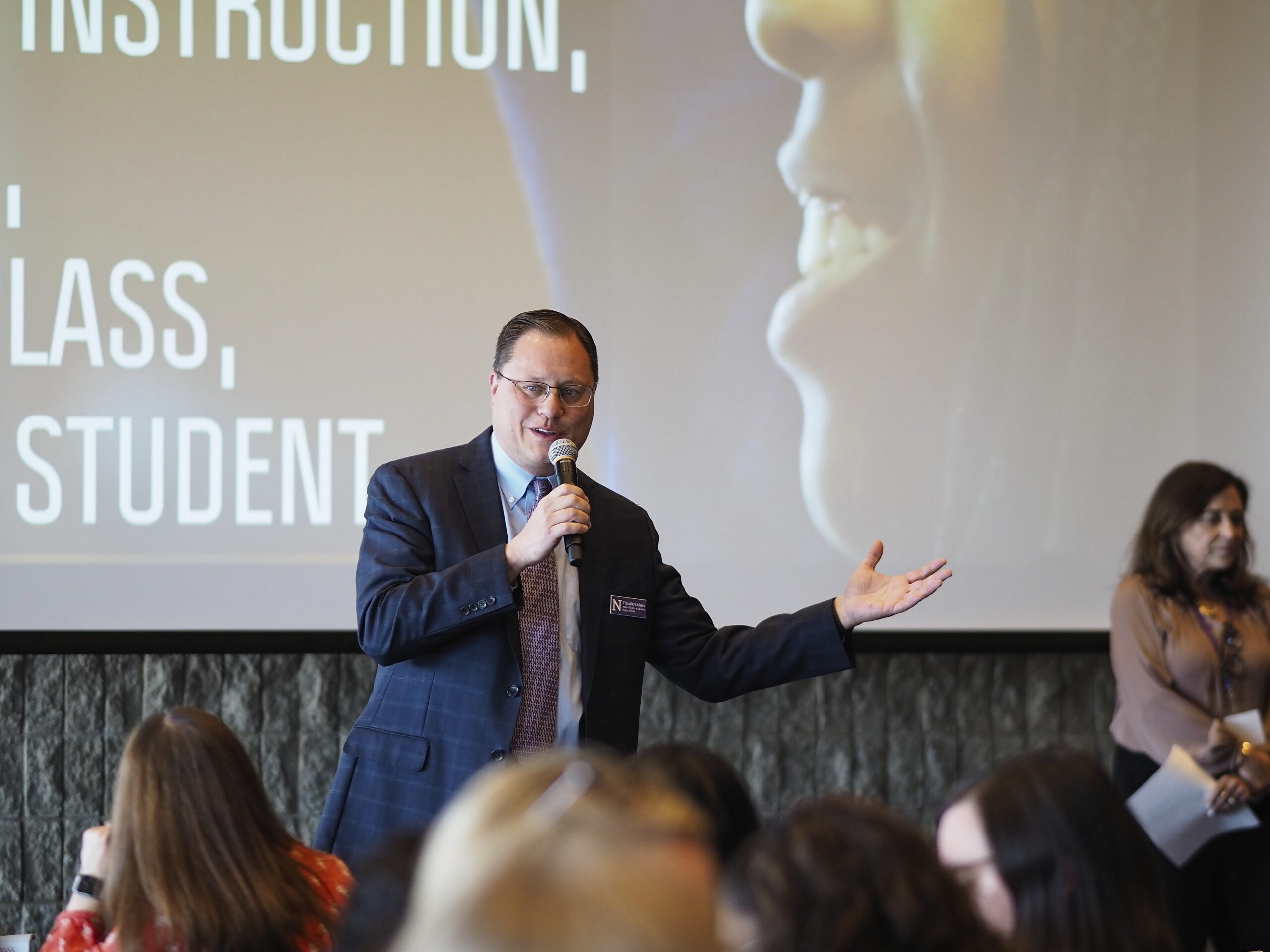
The Educational Coaching Network will specifically further our efforts around equity and opportunity as well as educator engagement and retention, and the Educational Coaching Network serves as an outstanding addition to further the coaching-centric efforts of the Illinois P-20 Network’s partner organizations at Northern Illinois University, such as NIU STEAM, the Illinois MTSS Network, and the Illinois Migrant Education Program.
With registration about to open in the coming weeks, today, you can already check out the full slate of ECN workshops coming up on our new Illinois P-20 Network Educational Coaching Network website: p20network.niu.edu/ecn
April 2023Career Pathways Virtual Trailheads – Jeannail Carter – Esports Player
Originally launched during the COVID-19 Pandemic when students could not engage in face-to-face or on-site work-based learning experiences, the Career Pathways Virtual Trailheads video series brings people from a wide range of occupations to students remotely to learn about their careers and the competencies necessary for success.
In this Career Pathways Virtual Trailheads episode, we interview Jeannail Carter, who is a professional esports player. Jeannail is a graduate of Northern Illinois University. Jeannail Carter became a professional player after pursuing her art degree, and currently travels the world playing Tekken, a video game fighting series that began in 1994. In addition, Jeannail is also a public speaker, brand ambassador for Red Bull, and mentor.
Carter’s work as a professional esports player crosses multiple Career Pathways, including Arts and Communications, Finance and Business Services, and Information Technology.
In this video, Jeannail shares her journey to becoming a professional player, training, and what many may not know about her career path. She wants to be an inspiration to students, who may have an interest in art and technology. She discusses what a typical day looks like in her competitive world, and also about skills needed to be successful. The Essential Skills of critical thinking, collaboration, organization, time management, communication, and productive struggle are highlighted in this episode. Ms. Carter takes pride in reaching back to help others and to also encourage students.
To keep up-to-date as new Career Pathways Virtual Trailheads videos are released, subscribe to the P-20 Network YouTube Channel.
March 2023Career Pathways Virtual Trailheads – Jasmine Carey – STEM Teacher
Originally launched during the COVID-19 Pandemic when students could not engage in face-to-face or on-site work-based learning experiences, the Career Pathways Virtual Trailheads video series brings people from a wide range of occupations to students remotely to learn about their careers and the competencies necessary for success.
In this Career Pathways Virtual Trailheads episode, we interview Jasmine Carey, who is a STEM teacher at an elementary school in Rockford, Illinois. After graduating from Simeon Vocational High School in Chicago Illinois, she obtained her undergraduate degree followed by her master’s degree in Instructional Technology, both from Northern Illinois University. Jasmine became a STEM (Science, Technology, Engineering, Mathematics) teacher at a charter school 4 years ago. During that time, she has learned the importance of exposing students to STEM. The excitement of her students keeps her thinking of new ways to engage them.
Carey’s work as a STEM Teacher is part of the Human and Public Services Career Pathway.
In this video, Carey shares her journey to becoming a teacher and how STEM instruction is for all students. She discusses overcoming challenges, and learning from failure. The Essential Skills of critical thinking, communication, and offering constructive feedback are highlighted in this episode. There is discussion of the engineering design process and how that can be applied to almost anything. Learning in Ms. Carey’s class is engaging and fun, and sometimes students are not even aware of how much they are learning.
Watch this Career Pathways Virtual Trailheads video with STEM teacher Jasmine Carey.
To keep up-to-date as new Career Pathways Virtual Trailheads videos are released, subscribe to the P-20 Network YouTube Channel.
February 2023Career Pathways Virtual Trailheads – Mondrian Contreras – Veterinarian
Originally launched during the COVID-19 Pandemic when students could not engage in face-to-face or on-site work-based learning experiences, the Career Pathways Virtual Trailheads video series brings people from a wide range of occupations to students remotely to learn about their careers and the competencies necessary for success.
In this Career Pathways Virtual Trailheads episode, we interview Mondrian Contreras, who is a veterinarian, who owns his own practice, Carol Stream Animal Hospital. After graduating from Riverview High School in Sarasota, Florida, he obtained his undergraduate degree from the University of Illinois College of Veterinary Medicine and continued his studies at the University of Florida College of Veterinary Medicine. In 2010, Mondrian was an intern at the VCA Aurora Animal hospital, and he has worked as the owner of the Carol Stream Animal Hospital since 2015.
Mondrian’s work as a veterinarian is part of the Agriculture, Food, and Natural Resources Career Pathway.
In this video, Mondrian shares his journey to becoming a veterinarian, the resilience needed to be a successful student and business owner, his daily responsibilities, and how he found his passion. He talks about the importance of customer service skills, overcoming challenges, and the critical connections that he makes with his clients. Mondrian talks about celebrating his successes and critical thinking skills needed in his field. He also emphasizes the importance of having fun and doing what you love as part of your career.
Watch this Career Pathways Virtual Trailheads video with Veterinarian Mondrian Contreras.
To keep up-to-date as new Career Pathways Virtual Trailheads videos are released, subscribe to the P-20 Network YouTube Channel.
February 2023Return of the Career Pathways User Group
In collaboration with the Illinois State Board of Education’s Career and Technical Education (CTE) and Innovation team, the Northern Illinois University CTE Project hosts the state-wide Illinois Career Pathways User Group to support the adoption, growth, and ongoing improvement of the Illinois College and Career Pathway Endorsements, with authentic learning, integrated learning, and work-based learning at the heart of these efforts for all students across Illinois.
This video is the September 2022 meeting of the Illinois Career Pathways User Group. During this meeting, updates were provided to all participants about the growth in earned Endorsements across Career Pathways since the start of this policy in 2020, about recently passed HB3296 and its requirements to implement the Endorsements and the PaCE Framework, and with information about the application process for school districts. Watch the video of the meeting below or on the Illinois P-20 Network YouTube Channel.
If you are not already part of the Illinois Career Pathway User Group, register today in order to access the Google Group and meeting invitations.
September 2022Dual Credit Think Tank Policy Brief Released
Strategies to Support Teachers in Credentialing for Dual Credit
In January 2022, the Illinois P-20 Network’s Dual Credit Think Tank launched a state-wide survey to gather examples from school districts of contract language, policies, procedures, and practices that support dual credit teacher licensure. Particularly in the face of the teacher shortage, school districts must identify new strategies to address these credentialing issues. While the recent amendment to the Illinois Dual Credit Quality Act includes an extension for teachers to secure a professional development plan which allows them to start teaching dual credit courses while they finish the minimum teaching qualifications as prescribed by the Higher Learning Commission, school districts continue to face significant challenges in supporting the necessary number of teachers in becoming credentialed to teach dual credit classes.
Additional support and resources are necessary to increase the number of teachers with dual credit credentials. Understanding school districts’ need for guidance on how they can leverage existing mechanisms, the Dual Credit Think Tank has published Strategies to Support Dual Credit Teacher Credentialing, a policy brief for educators and advocates that highlights best practices for schools to adopt in their aim to further support teachers’ journey towards meeting the minimum qualifications to teach dual credit courses. Specifically, the brief offers recommendations, based on the responses to the survey from earlier this year, on how school districts can collaborate with teachers via their collective bargaining agreements to implement financial assistance and incentives.
August 2022Summer Speaker Series Videos Online
Today, the final educator panel in this year’s Illinois State Board of Education (ISBE) CTE Summer Speaker Series was held, and now, we are pleased to share all three keynotes and all three educator panels online as resources for professional learning moving forward for educators across Illinois in Career and Technical Education (CTE) and beyond. The theme for the ISBE CTE Summer Speaker Series was CTE for ALL students and for EACH student, with a clear focus on equity and inclusion and providing support to schools to overcome barriers in order to give all students access to high quality CTE and Career and College Readiness instruction.
Each of the events listed below is linked to the corresponding YouTube video for that event. All of the YouTube videos are also organized into a single ISBE CTE Summer Speaker Series 2022 YouTube Playlist.
Family & Community Engagement and Postsecondary Placement
- Keynote – Dr. Ayanna Brown, Elmhurst University & Thought Spectrum, LLC
- Educator Panel
Active Recruitment of Special Populations into CTE Programs and Nontraditional Careers
- Keynote – Dr. Amanda Bastoni, CAST
- Educator Panel
Elimination of Barriers for Individual CTE Students
- Keynote – Dr. Valerie Milton, Michigan Department of Education
- Educator Panel
High-Quality CTE – White Paper & Webinar
ISBE’s Career ConneCTEd Illinois and the NIU Illinois CTE Project, under the leadership of NIU STEAM and Illinois P-20 Network, have released High-Quality CTE: What the Literature Says About Standards, Curriculum, Instruction, and Partnerships. The white paper provides an overview of the most effective and inclusive practices related to curriculum, instructional resources, instructional strategies, and business and community partnerships specifically in the context of secondary school CTE.
In addition to the full written report, an overview of the white paper was provided via a webinar on June 15, 2022. Watch the recording of the webinar presentation, and learn more about the key takeaways from the analysis!
Dual Credit and Weighted Grades
As a result of conversations with a number of high school administrators in different school districts who wanted to understand the landscape of how school districts are weighting grades for dual credit coursework within their high school grade point average systems, the Dual Credit Think Tank conducted a survey asking school districts the question of if (and, if so, how) dual credit courses are weighted in their school district.
Based on each district’s answer to this single question and knowing what district each answer was coming from, deeper analysis was also able to take place based on a number of other demographic factors regarding students and teachers in each school district. The results of this survey, and policy recommendations from the Dual Credit Think Tank are contained in this slide deck, which was presented as part of a Dual Credit Think Tank Update webinar to ILACEP in March 2022. In short, the Dual Credit Think Tank recommends:
March 2022If you have weighted classes, ALL early college credit coursework should be weighted the same as advanced/accelerated classes.
Illinois P-20 Network Dual Credit Think Tank, March 2022
Illinois Postsecondary Profiles Launches Equity Profiles
Last week, the Illinois Postsecondary Profiles (IPP) website launched its newest major component, Equity Profiles. The Equity Profiles will shine a light on the success of diverse populations in postsecondary institutions in Illinois. The Equity Profiles joins the site’s other major components:
- Institutional Profiles, which allows users to discover the basics about postsecondary institutions, such as different types of schools, tuition, and what credentials are offered.
- Occupational Profiles, which lets users see the available majors, key employment data, and programs of study for the career pathways in which you are interested.
- Regional Profiles, which presents metrics on a map by Illinois Community College district.
The IPP website is a joint effort of the Illinois Board of Higher Education, the Illinois Community College Board, and the Illinois Student Assistance Commission that presents a wide range of postsecondary data from multiple state agencies through a single interface.
Fall Meeting 2021 Panels – Available Now on YouTube
The Illinois P-20 Network’s Fall Meeting in 2021 consisted of a series of individual panel discussions over a series of weeks addressing the following three topics:
Developing, Recruiting, and Retaining Diverse High-Quality Teachers – The shortage of teachers and other school staff continues to draw widespread attention, predating the start of the wider “Great Resignation” that is impacting the workforce. This diverse panel of educators representing school districts, community colleges, and universities discusses the innovative ways that they are seeking to address the teacher shortage with programs that engage potential future teachers beginning as early as high school. Panelists include:
- Brian Giovanini & Katie Popp, Indian Prairie School District 204
- Janis Jones, Sauk Valley Community College
- Ron McCord, Rock Falls Township High School District 301
- Jenny Johnson & Danielle Lauritzen, Northern Illinois University
- Stacy Thompson, Grow Your Own Illinois, Southern Illinois University
Equity in Practice: Connecting Learners with their Schools-Colleges-Universities – Illinois closely resembles the demographic composition of the United States as a whole, and communities across Illinois have become increasingly diverse in recent decades. Along with this diversity, schools, colleges, and universities across Illinois have prioritized the importance of equity and inclusion, both as a way of honoring all learners and staff members and as a way to ensure deeper and increased learning outcomes. This unique panel explores specific attitudes and actions that must be prevalent in learning organizations in order to most likely ensure strong interpersonal connections as the foundation for teaching and learning. Panelists include:
- Jocelyn Santana, Northern Illinois University
- Cherry G & Sam J, Palatine High School
Career Pathway Endorsements: A Strategy for Improving Learning School-Wide – In only its third year of state-wide implementation, the Illinois Career Pathway Endorsements provide great opportunities for students to learn, practice, and demonstrate both the Technical Competencies and the Essential Skills (Cross-Sector Essential Employability Competencies). The Career Pathway Endorsements, with their focus on Authentic Learning both in the classroom and beyond, also provide opportunities for schools to shift the nature of learning significantly in their schools. This session includes representatives from two school districts: Ridgewood High School, which has had students graduate with Career Pathway Endorsements in each of the first two years that they were able to be offered, and Lake Zurich High School, which is on-track to have its first students earn Career Pathway Endorsements at the conclusion of this academic year. Panelists include:
- Lisa Balata, Ridgewood High School
- Zach Gimm, Lake Zurich Community Unit School District 95
- Eric Lasky, Ridgewood High School
- Susie Wagner, Lake Zurich Community Unit School District 9
A New Resource for Teachers & Counselors – The Career Pathways Virtual Trailheads Essential Skills Guide
One of the most critical components of Illinois’ work around the College and Career Pathways are the Cross-Sector Essential Employability Skills (See page 6 of the Illinois CCPE Competencies Guide). Referred to as the “Essential Skills” in shorthand and commonly referred to as “soft skills” in the business community, these competencies are critical for all of our students across all Career Pathways. Additionally, through a year’s worth of Career Pathways Virtual Trailheads episodes, we’ve found that the Essential Skills are a consistent and detailed component of each interview.
To help teachers, counselors, and others incorporate the Career Pathways Virtual Trailheads episodes as another instructional resource in their classrooms, we are in the process of developing The Career Pathways Virtual Trailheads Essential Skills Guide. While the content is up-to-date in this draft mapping of the Essential Skills across the Career Pathways Virtual Trailheads episodes, we are still working to develop a finalized web solution. Knowing that both school leaders and teachers will begin planning instruction for the 2021-2022 school year over the summer, we wanted to share this resource now, even in its current work-in-progress form.
May 2021Recap of the Spring 2021 Network Meeting
The Illinois P-20 Network hosted its Spring 2021 Meeting online on Thursday, April 29, 2021. The Spring 2021 Meeting, Lessons for our journey forward: Putting lessons from COVID-19 into practice for all students, was free and open to educators across Illinois. The purpose of this year’s Spring 2021 Illinois P-20 Network Meeting was to bring educational leaders together from all levels of education across Illinois and to identify the most effective practices and strategies that have been implemented over the past year.
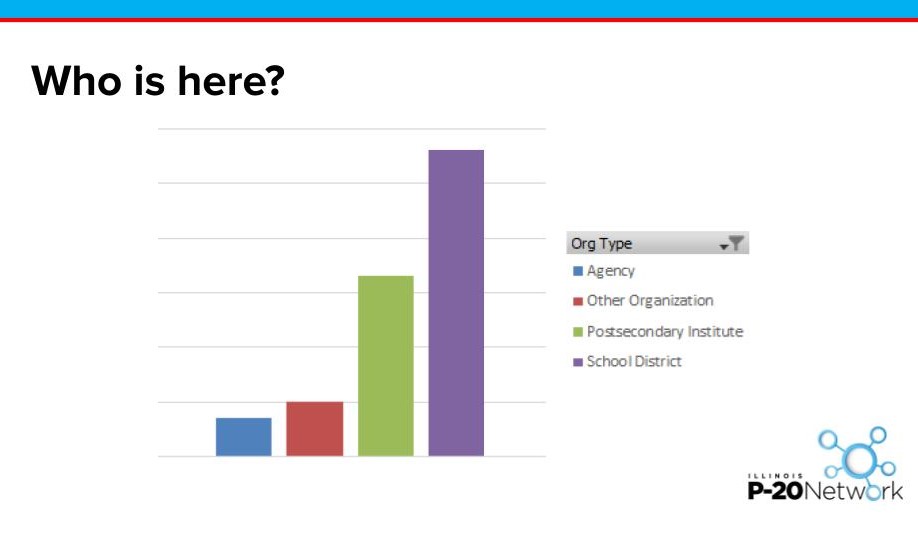
While this was the third consecutive Illinois P-20 Network Meeting that was held online, this was the first meeting that was held live (synchronously) rather than as an asynchronous series of videos posted as a YouTube Playlist (Check out the Fall 2020 Meeting Playlist and the Spring 2020 Meeting Playlist). Taking advantage of the meeting’s online format, a wide range of attendees participated, stretching geographically across Illinois from north to south and from east to west, and representing the full range of organizations that make-up the Illinois P-20 Network.
Following introductions and remarks from Northern Illinois University President Lisa Freeman and Dean of the NIU College of Education Laurie Elish-Piper, the Spring Meeting featured a keynote presentation from Stephanie Malia Krauss, who has authored the newly published book, Making It: What Today’s Kids Need for Tomorrow’s World. Stephanie has served as a Senior Advisor at JFF as well as a former teacher and school leader. Today, she is also the parent of school-age children. Learn more about Stephanie, including being able to purchase her book, on her website. In her keynote presentation, Stephanie describes the environment in which today’s school-age learners have lived throughout their lives, including everything from current events to modern technology, and how these factors have influenced students’ lives and learning. Stephanie also discusses the changing nature of the workplace and careers, and Stephanie challenges schools to consider specific changes that must take place in order to meet these different realities than those on which modern schools were originally built.
One key feature of the Spring 2021 Illinois P-20 Network Meeting was our Student Panel, which included students ranging from middle school through undergraduates and from one end of Illinois to the other. The students on the panel shared their reflections about their experiences during this unique 2020-2021 school year and what suggestions they have for schools and learning moving forward. As is always the case with listening to our students, nothing can replace watching the full video below, but key elements highlighted by students included:
- Remote learning had key benefits including increased participation among a wider range of students and a greater ability to focus on learning rather than the performative social aspects of schooling
- Flexible approaches to scheduling are important
- Relationships between and among students and teachers remain important regardless of the format of the learning environment
Following the Student Panel, participants had the opportunity to engage in two different Breakout Room discussions from among five different categorical topics:
- Diversity, Equity, and Inclusion
- Learning & Time & Space
- Teacher Workforce
- Assessment & Data
- Community Engagement
Each of these was facilitated by a leader in the particular space, and discussion focused around the following questions:
- What were the lessons we’ve learned over the past year during COVID-19 related to (The Breakout Room Topic)?
- Based on this year’s experiences, what practices and/or structures should we implement to improve learning for all students moving forward?
- What resources and policies do we need to be in place in order to make these changes effective, lasting, and sustainable?
During each Breakout Room discussion, NIU STEAM team members assisted by taking detailed notes. These notes are currently being coded and analyzed and will be used in conjunction with the exit slip survey data in order to determine priority areas of focus for the Illinois P-20 Network and for us collectively as a state in order to further improve learning for all students and for each student across Illinois from early childhood through ongoing adult education. The results of this work will, of course, be shared broadly with the Illinois P-20 Network, the state agencies, and beyond.
May 2021Career Pathways Virtual Trailheads – GCAMP Manufacturing Panel
Since students cannot be engaging in face-to-face or on-site work-based learning experiences, we’re bringing people from a wide range of occupations to students remotely. These videos will allow students to learn about their work, the skills that are most important in their work, and to benefit from the advice that these professionals have to offer students.
In this Career Pathways Virtual Trailheads episode, we meet with a panel of manufacturing experts from GCAMP, an organization in Chicago’s Northwest Suburbs that seeks to promote careers in manufacturing and connections between schools and manufacturing companies. In this episode, our panelists discuss their own careers, the work that their companies do, the different roles in which they have served, and the type of skills necessary for success in the manufacturing industry.
This wide-ranging Career Pathways Virtual Trailheads panel conversation provides countless examples of the importance of ensuring that all students have strongly developed the essential skills by the time that they graduate from high school. With high needs for employees in the manufacturing sector in locations across Illinois, manufacturing companies are confident that they can provide quality on-the-job training to new employees provided that those employees already exhibit strengths with each of the cross-sector essential employability skills.
Watch this special edition, panel discussion Career Pathways Virtual Trailheads video focused on manufacturing featuring Kathleen Burley (GCAMP Executive Director), Chris Kaiser from Big Kaiser, and Paul Rimington from The Diemasters.
To keep up-to-date as new Career Pathways Virtual Trailheads videos are released:
- Follow the P-20 Network on Twitter
- Subscribe to the P-20 Network YouTube Channel
Information about applying for Career Pathway Endorsements for the 2021-2022 school year!
The ISBE College & Career Pathways Endorsement website has been updated and includes a variety of resources that will assist those with their plans to implement/offer pathway endorsements to students. Included among these resources are an updated ISBE College and Career Pathway Endorsement Framework and the ISBE Pathway Endorsement Infographic.
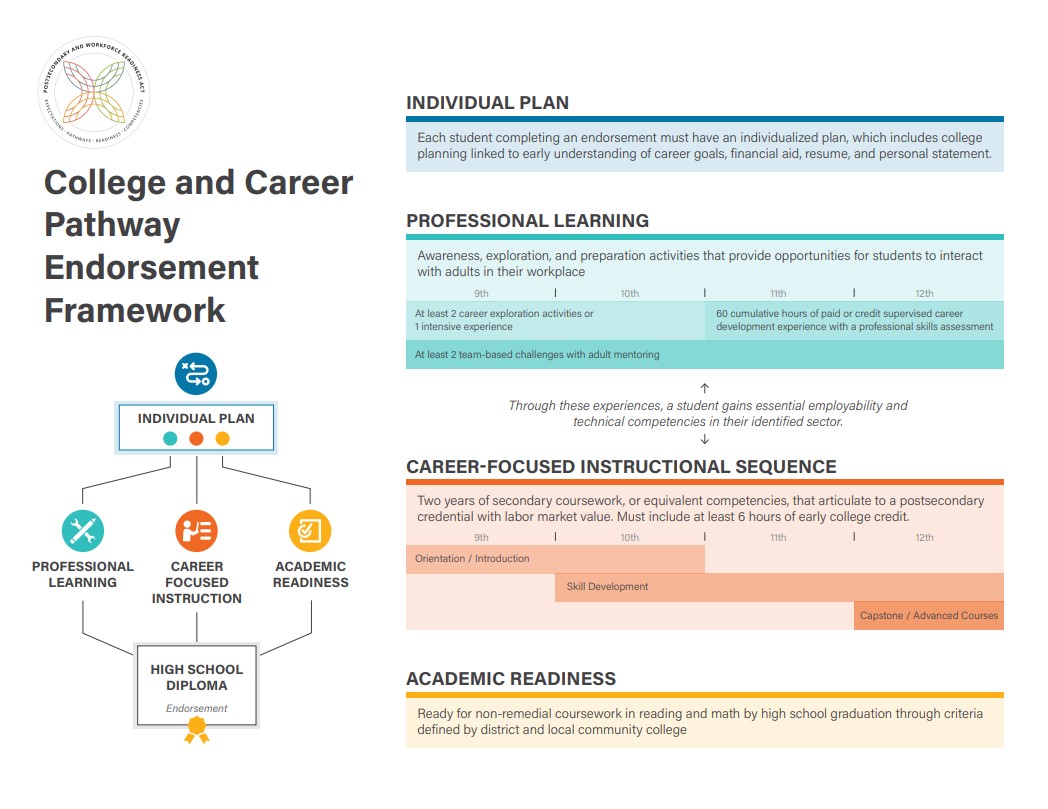
Should schools wish to begin building plans within the online web tool, they would need to contact Heather Strom at the Illinois State Board of Education so that she can provide the school district with a link to the web tool (Email: pathwayendorsements@isbe.net). Please note that first, the school district would want to gather the necessary information using the Excel spreadsheet. This will make data entry easier and more accurate.
Also, if you are planning on issuing any Career Pathway Endorsements for FY21, you will need to complete the FY21 application and district projections that are found on the ISBE CCPE website.
In corresponding about this important announcement, Heather said, “I’m very excited to be working with schools and applaud their efforts to offer pathway endorsements to their students!” Obviously, the Illinois P-20 Network echoes this sentiment. If you have questions, please reach out to Heather at the email address included above, but please feel free to contact us as well as the team at Education Systems Center as we can continue to work collaboratively to support both ISBE and all of you working in school districts.
April 2021Career Pathways Virtual Trailheads – Trishna Singh and Octave Rouege – Business Analysts
Since students cannot be engaging in face-to-face or on-site work-based learning experiences, we’re bringing people from a wide range of occupations to students remotely. These videos will allow students to learn about their work, the skills that are most important in their work, and to benefit from the advice that these professionals have to offer students.
In this Career Pathways Virtual Trailheads episode, Trishna Singh and Octave Rouege, both Senior Contract Analysts at Premier Inc, a healthcare technology company, share information about their careers and the workplace. With Trishna’s background in Neuroscience and Behavioral Biology, and Octave’s background in Marketing and Accounting, they provide great examples of the very different paths one can follow into this career as well as providing insightful examples of the essential skills necessary for success. Trishna studied at Emory University, and Octave earned degrees at the University of Southern Mississippi and Lakeland University.
In their roles as Business Analysts, they combine both clinical and purchasing data to help health systems make the best choices both in terms of medical purchases and general maintenance of the facility. While Trishna and Octave have very different academic backgrounds, the fact that they are doing the same job is proof that the essential skills are the foundation for landing any type of job and excelling at the position.
Trishna and Octave’s work as Business Analysts is part of both the Health Sciences and Technology Career Pathway and the Finance and Business Services Career Pathway.
In this video, Octave and Trishna share how their interest in health care and helping communities around them has contributed to making them successful in this role. They also talk about the importance of being willing to learn and understanding what a job entails before taking up a position. Both guests emphasize that being detail-oriented, having the ability to delegate when necessary, being able to communicate effectively with others, and adapting to a wide variety of different situations are critical to having a successful career in data analysis. Trishna stresses the need to be able to advocate for yourself and having basic knowledge of Microsoft Excel as crucial for getting an internship position in the world of data analysis. She also encourages students who are interested in working in a role like theirs to explore learning about data tools such as spreadsheets, to apply for internships, and to volunteer in hospitals or healthcare systems around their communities. Octave encourages students to shadow a professional in the position they aspire to hold as this will help paint a clear picture of what the role entails and what one will need to do in order to be successful.
To keep up-to-date as new Career Pathways Virtual Trailheads videos are released:
- Follow the P-20 Network on Twitter
- Subscribe to the P-20 Network YouTube Channel
More Draft Model Programs of Study Guides Released
This week, drafts of four new Model Programs of Study Guides were released in the following areas:
- Agriculture, Food, and Natural Resources
- Architecture, Construction, and Energy
- Arts and Communication
- Finance and Business Services
Public comments are encouraged and should be made through this Public Comment Form through June 5, 2021. There will also be an introductory webinar held on April 16, 2021 at 11 AM. Click here to register for the webinar.
These Model Programs of Study Guides were developed through a process that was sponsored by the Illinois Community College Board and implemented in collaboration with the Illinois State Board of Education. Education Systems Center led this process. The first four Model Programs of Study Guides were published during the Summer of 2020, and they are:
April 2021P-20 Network Spring Meeting Keynote – Making It Author Stephanie Malia Krauss
The Illinois P-20 Network is hosting its Spring 2021 Meeting online on Thursday, April 29th at 9 AM. The Spring 2021 Meeting, Lessons for our journey forward: Putting lessons from COVID-19 into practice for all students, is free and open to educators across Illinois. To join us, complete this short online Spring 2021 Meeting registration form.
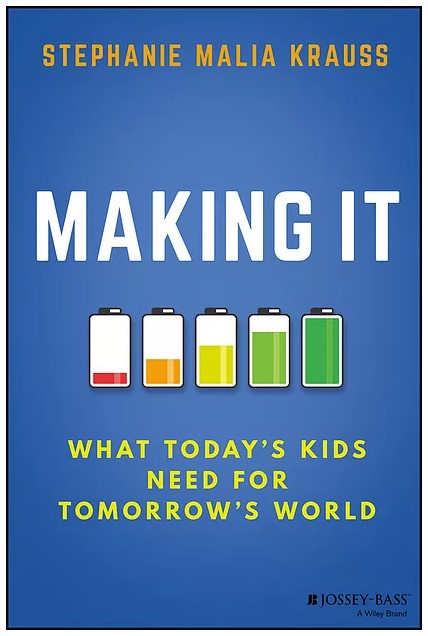
Today, we are excited to announce that the Spring Meeting will feature a keynote presentation from Stephanie Malia Krauss, who has authored the newly published book, Making It: What Today’s Kids Need for Tomorrow’s World. Stephanie is a Senior Advisor at JFF. Stephanie is also a former teacher, school leader, and a Metro East parent of children who are in school today on the Illinois side of the Mississippi River in the St. Louis area. Learn more about Stephanie on her website, stephaniemaliakrauss.com.
The purpose of this year’s Spring 2021 Illinois P-20 Network Meeting is to bring educational leaders together from all levels of education across Illinois and to identify the most effective practices and strategies that have been implemented over the past year.
Then, together, the Illinois P-20 Network will answer these questions, among others:
- Which of these strategies have demonstrated new ways of serving students and/or collaborating as educators to have a greater impact than what we have traditionally done?
- How has what we have learned this year broadened our vision of what the possible range of approaches to nurturing and supporting all learners?
- What policies and resources are necessary to move these practices into sustainable components of our educational structures and systems?
Stephanie’s book and keynote address will provide the perfect foundation on which we can collectively imagine schools that maximize learning for all students. To join us at the Illinois P-20 Network Spring 2021 Meeting, complete this short online Spring 2021 Meeting registration form.
March 2021Occupational Profiles launch on Illinois Postsecondary Profiles website
The Illinois Postsecondary Profiles (IPP) website originally launched in October 2019 with the first of three major elements available to the public at the time of its launch – Institutional Profiles. Learn more about the original phase of the IPP website from October 2019.
Today, the Illinois Postsecondary Profiles website rolls out a number of major features as the second major phase of the site’s development.
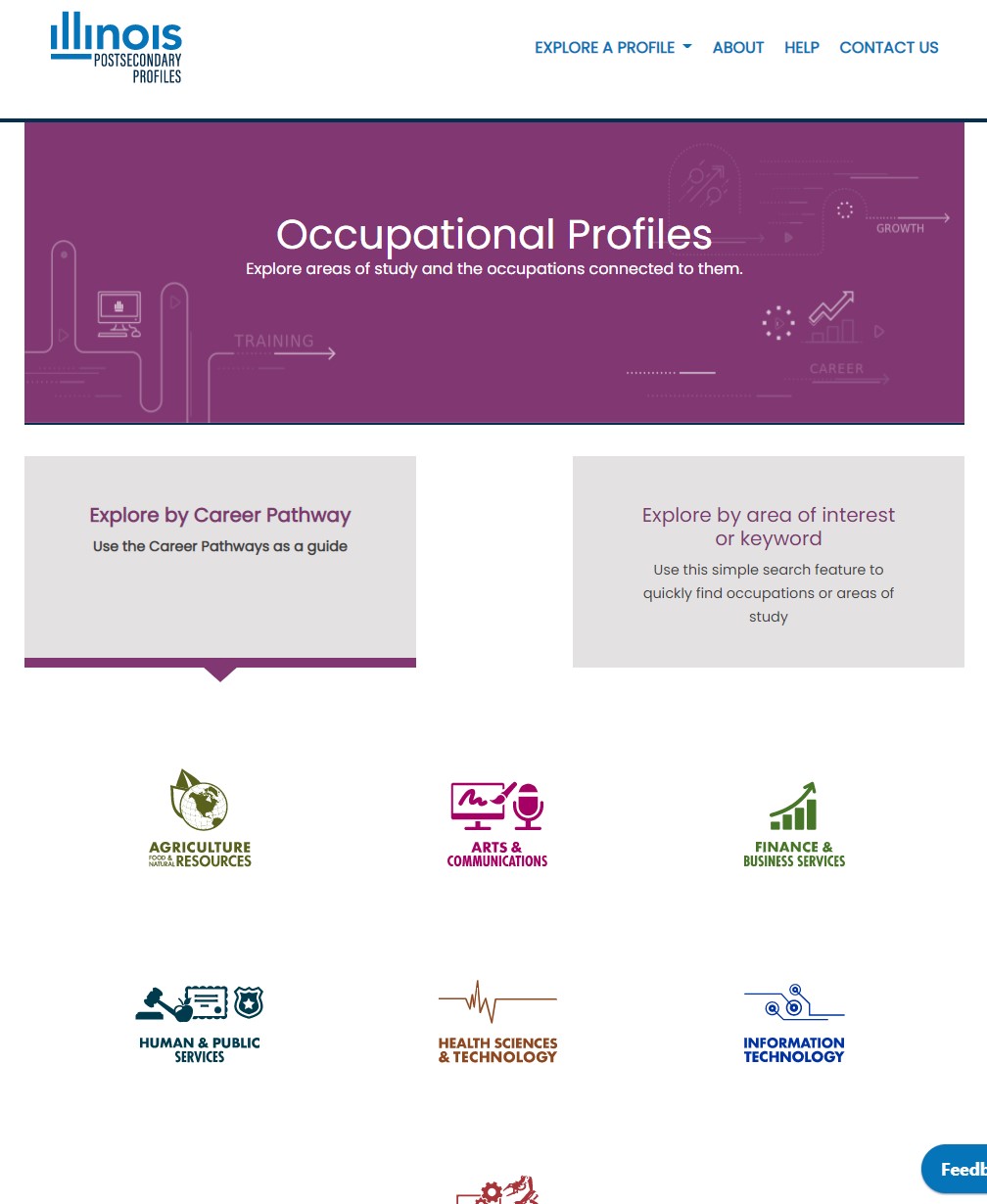
- Occupational Profiles, which provides users with opportunities to explore occupations and/or postsecondary areas of study (i.e., topics in which students major in college) by the 7 Illinois Career Pathways or by a keyword search or area of interest. Data about occupations is linked with both data regarding related areas of study and the postsecondary institutions in Illinois that offer these areas of study. Together, this provides a rich set of easy-to-access data that is unique among tools of this kind.
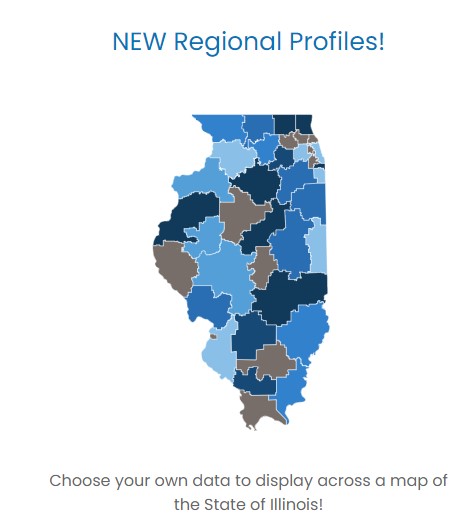
- Regional Profiles, which utilizes an interactive map (also known as a choropleth) that is currently organized by Illinois’ community college district boundaries, to display completion, enrollment, and population data. In the future, additional data sets and geographic boundary regions will be available for website visitors.
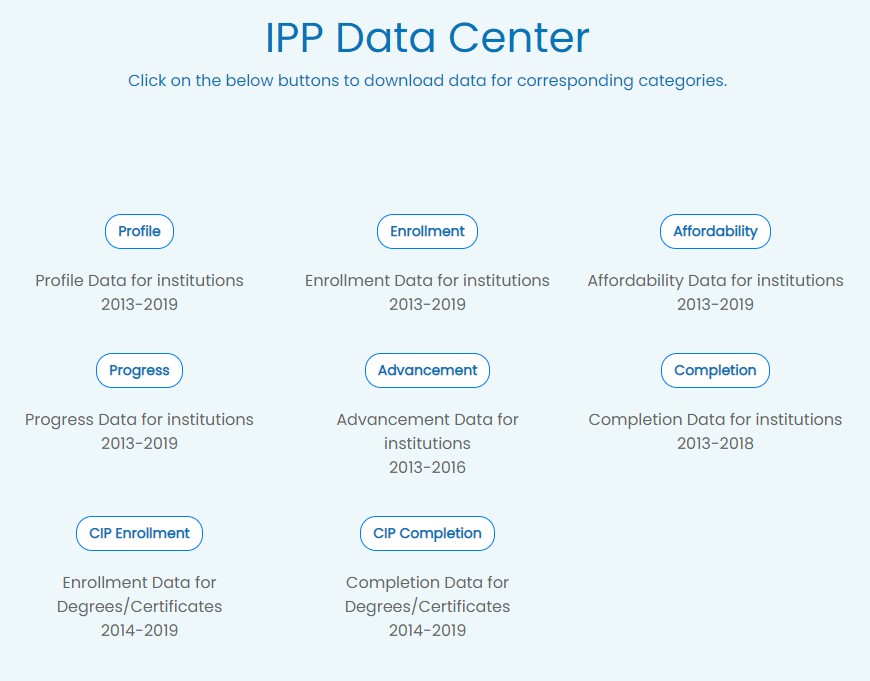
- IPP Data Center – A centerpiece of the IPP website since its debut has been the ability to download data presented on the website in its entirety. Given that this data comes directly from Illinois’ state agencies responsible for postsecondary education, being able to easily access these complete data sets is a great benefit to researchers in Illinois and around the world. With this release, the IPP Data Center has been significantly expanded with additional data available for download.
In a future release, the final major originally planned component of the Illinois Postsecondary Profiles will launch – Equity Profiles, which will support the exploration of data from postsecondary education across Illinois based on student demographic information.
January 2021Transitional Math ISBE SIS & Portability Code Information
The Illinois P-20 Network is pleased to share the following information on behalf of the Illinois State Board of Education and the Illinois Community College Board.
In order for students to receive the full benefits of Transitional Math, the correct Illinois State Board of Education Student Information System (SIS) course code and Illinois portability codes must be utilized. The Transitional Math SIS codes can be found below and are also within the provided portability document templates as well as the policies document, which can be found on the Illinois Transitional Math website.
Please note that there are different ISBE SIS course codes and portability codes for each of the distinct Transitional Math courses that are offered.
As always, school districts should ensure that they are uploading the correct course codes in ISBE SIS to accurately report students’ course completions.
Additionally, portability codes should be placed on the high school transcripts of students who have successfully completed a Transitional Math course. Community Colleges across Illinois utilize the portability code from the high school transcript to identify students who should be correctly placed in college credit-bearing mathematics courses.
- STEM Pathway
ISBE SIS Code – 02055A001
Portability Code – TM001 - Quantitative Literacy and Statistics Pathway
ISBE SIS Code – 02201A001
Portability Code – TM002 - Tech Pathway
ISBE SIS Code – 02153A001
Portability Code – TM003
Implementation of Transitional Math is now entering the second semester of the second year of implementation. We currently have over 200 approved courses across the state of Illinois. We are excited to see the progress that school districts and students are making with the implementation of Transitional Math. Approved courses can be found on the Illinois Transitional Math website.
As a reminder, the next opportunity for Transitional Math portability submission is due on March 1, 2021, and those submissions will be considered at the Spring Portability Panel meeting on April 14, 2021.
If you have any questions regarding transitional courses, please e-mail TRInstruction@isbe.net.
January 2021Career Pathways Virtual Trailheads – Yvonne Boose – Radio Journalist
Since students cannot be engaging in face-to-face or on-site work-based learning experiences, we’re bringing people from a wide range of occupations to students remotely. These videos will allow students to learn about their work, the skills that are most important in their work, and to benefit from the advice that these professionals have to offer students.
In this Career Pathways Virtual Trailheads episode, we interview Yvonne Boose, who today is a radio journalist at WNIJ, a public radio station that is based at Northern Illinois University. During her senior year at Bogan High School, Yvonne took her grandfather’s advice. She went on to study Speech Communication at Chicago State University, where she learned radio and television production.
After graduating with her Bachelor’s Degree, Yvonne began working in customer service for Ameritech, a large telecommunications company in the Midwest at that time that was formerly part of AT&T and remain connected to AT&T in a number of ways. While Yvonne continued to earn promotions for her work, she also continued to desire a career in journalism. During this time period, she was able to begin an internship with AT&T Cable where she covered local stories on a television show called Hometown Edition. This internship confirmed for Yvonne that she did want to pursue journalism, so she went to Roosevelt University and earned a Master’s Degree in journalism. With her Master’s Degree, she obtained another internship at Beacon News in Aurora before moving into her current role at WNIJ.
Yvonne’s work as a journalist is part of the Arts & Communication Career Pathway.
In this video, Yvonne shares how her customer service skills have helped her make connections as a journalist with sources that are critical to telling honest and complete stories. She also talks about the need for students to be willing to take up volunteer and internship positions in order to build their experiences. Yvonne emphasizes that the following skills are critical to have success as a journalist: integrity, the ability to build honest and positive relationships with others, strong listening skills, robust organizational skills, the ability to accept feedback with a positive attitude, and having a hunger for new knowledge.
Watch this Career Pathways Virtual Trailheads episode with journalist Yvonne Boose.
To keep up-to-date as new Career Pathways Virtual Trailheads videos are released:
- Follow the P-20 Network on Twitter
- Subscribe to the P-20 Network YouTube Channel
The Essential Skills – A Brief Overview + An Activity
NIU STEAM continues to provide leadership and resources with regards to providing students with learning opportunities related to the Cross-Sector Essential Employability Skills, also known as the Essential Skills.
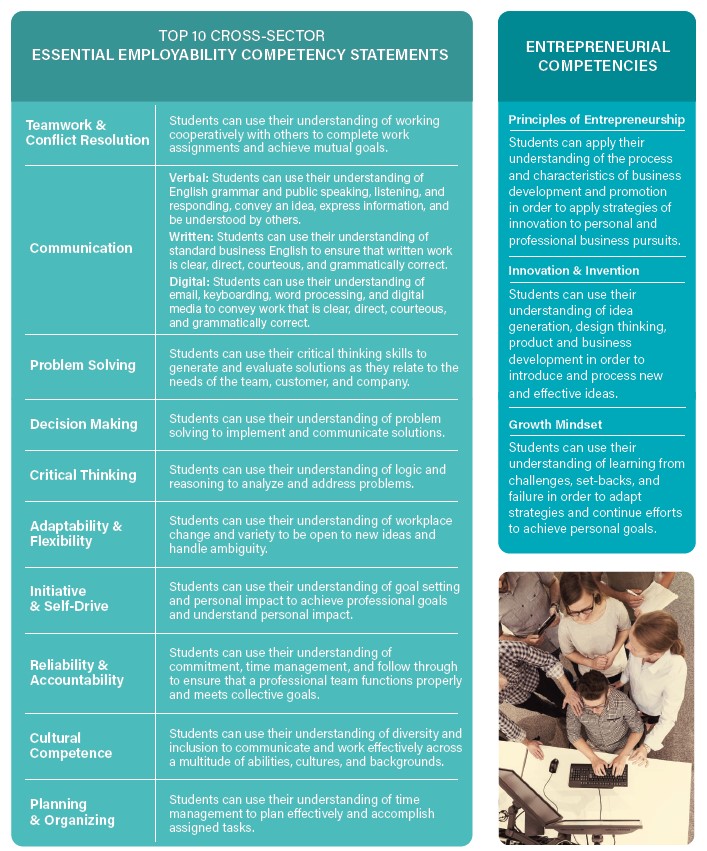
The Essential Skills and career exploration are increasingly being built into a wide range of NIU STEAM activities. As more and more students also benefit from these type of College and Career Readiness activities in Illinois schools, the alignment between enrichment activities through NIU STEAM and their regular work in school will further deepen and enhance students’ essential skillset.
For this activity, students begin by watching this short introduction to the Essential Skills that is on YouTube and is less than 10 minutes in length.
Then, students are introduced to the Career Pathways Virtual Trailheads video series on YouTube. Students are asked to scroll through the video titles and descriptions and select 5 that are most interesting to them.
Then, students will watch the five videos that they have selected and use this NIU STEAM Essential Skills Checklist to identify which of the Essential Skills are evident in which of the videos.
Finally, in small groups or as a class, students should analyze the results of their survey of the Essential Skills across the Career Pathways Virtual Trailheads videos, identifying the frequency with which different Essential Skills appear as well as any patterns that they may discover between highlighted Essential Skills and different Career Pathways.
December 2020Career Pathways Student Conversations – Geneseo High School
As a follow-up, we met with four high school seniors from Geneseo High School to learn from them about their plans for postsecondary education and careers and to gain a better understanding of how they use their Alumni Career Connections tool. As is essentially always the case when listening to students speak about their experiences, there are a wide range of lessons shared by these students for educators to consider when planning in their own schools.
At the time of the publication of this video and blog post in December 2020, three of the four high school seniors were still in the process of finalizing their postsecondary plans. In each case, these students are planning on attending four-year universities, though these students recognized the importance of career exploration for all students and the important role that a wide range of postsecondary education options play in serving all students today.
Looking to the future, ultimately, all four of these high school seniors were steadfast in their commitment to prioritizing a love for one’s work and the need to make a difference for others as the ultimate considerations in selecting their careers and courses of study to prepare them for success in these careers.
December 2020Career Pathways Virtual Trailheads – Cora Pauli – Electrical Engineer
Since students cannot be engaging in face-to-face or on-site work-based learning experiences, we’re bringing people from a wide range of occupations to students remotely. These videos will allow students to learn about their work, the skills that are most important in their work, and to benefit from the advice that these professionals have to offer students.
In this Career Pathways Virtual Trailheads episode, we interview Cora Pauli, who is an electrical engineer at HBK Engineering. HBK Engineering is regarded as one of COMED’s three most preferred companies to work with for project design. At an early age, Cora realized her love for mathematics and science and took the advice of her high school swimming coach at Amos Alonzo Stagg High School to study engineering in college. While in college, she interned with an engineering company where she learned about designing electrical distribution systems as well as learning AutoCAD. This experience contributed to her career choice as an electrical engineer. In her current role at HBK Engineering, Cora works in the power sector and handles projects that focus on the design of electrical distribution systems, specifically Cora’s work focuses on what takes place between the electrical substation and the customer’s business or home.
The work that Cora does on a daily basis is a part of the Manufacturing, Engineering, Technology, and Trades Career Pathway.
In this video, Cora shares with us some interesting facts about being a woman in the STEM field. She also talks about the need for young graduates who are interested in this field to love numbers and understand the basics of electrical engineering but to also possess a strong willingness to learn and ask questions. In addition to being forthcoming with questions, other essential skills for new electrical engineers to have include strong problem solving and communication skills. From crawling through manhole covers under streets in Downtown Chicago to projects that take place in Illinois’ corn and soybean fields, Cora is pleased to help provide people with consistent, reliable electricity using modern tools, like connected gear.
Watch this Career Pathways Virtual Trailheads video with electrical engineer Cora Pauli.
To keep up-to-date as new Career Pathways Virtual Trailheads videos are released:
- Follow the P-20 Network on Twitter
- Subscribe to the P-20 Network YouTube Channel
Alumni as Career Exploration Resources
In referencing college & career choices,
“We tried to figure out a way that our students could figure it out…”
Travis Mackey, Principal – Geneseo High School
Illinois’ Geneseo High School launched a website for both current students and alumni called Geneseo High School Alumni Career Connections that serves as a key component of the school’s career exploration efforts for and with students. This site connects graduates from Geneseo High School, which is about 25 miles west of the Mississippi River, the Quad Cities, and the Illinois/Iowa border, with one another and, most importantly, with current students. Through the Alumni Career Connections website, Geneseo alumni become a resource for career exploration for current high school students, who all engage with the Alumni Career Connections website systemically as part of their classes.
The full video presentation from the Illinois P-20 Network Career Pathways User Group is below, and this post continues below the video. For more information on the Illinois P-20 Network Career Pathways User Group, contact us via email.
The Alumni Career Connections Website – A tool that facilitates connections
Geneseo High School worked with a local website design company that already serves as their website provider to build out the custom Alumni Career Connections Website tool, which includes a survey for alumni to share their information, a database back-end, and a website with search parameters, an interactive map, and the search results and information that alumni have entered. At the time of this writing, there are currently almost 1,000 Geneseo alumni who have voluntarily submitted profiles. (For context, Geneseo High School currently serves just under 900 students according to the Illinois State Board of Education Illinois Report Card.) The school has a goal of doubling this to 2,000 alumni profiles.
Alumni are emailed and encouraged to provide their profiles and serve as a resource to current students, and even once in the database, reminder emails are sent every three years in order to ensure profiles are kept up-to-date as people change jobs and move from one location to another. Additionally, it should be noted that a Geneseo Community Unit School District 228 team must clean-up and verify each submission individually. (For example, this is one way to ensure that postsecondary institutions are listed in a single consistent format rather than having some respondents list Northern Illinois University as NIU while others write Northern.)
Systemically integrated into instruction
Teachers throughout the school use the Alumni Career Connections website in order to bring alumni into the classroom as experts who serve as guest speakers for students. Additionally, as teachers connect with alumni in specific fields, they actively reflect on the alignment between what and how they are teaching and the current reality of different types of workplaces. As a result of those conversations with former students, teachers make adjustments to their own instruction.
In addition to this approach, which positively impacts students throughout the school, all tenth grade students participate in a unit in their English class in which they identify a Geneseo graduate who works in an occupation that is of interest to them, and students interview them. Students are supported through this process with both a combination of pre-written consistent questions across all careers and with the flexibility to develop and ask their own specific questions that are of interest to them and/or specifically relevant to the occupation.
Building a positive culture around career exploration and connectedness
Central to the idea of the Alumni Career Connections website, is that it works on a “personal level” for current students. As Mr. Mackey describes, connecting students to alumni, “people who sat in the same seats that you (current students) do and had some of the same teachers you have had” has a tremendous impact on helping career exploration feel real to current students and that their career aspirations are possible. The tool has two other important side benefits:
- Alumni stay connected to one another and to the school.
- Alumni reference the teachers who impacted them, and honoring teachers “really keeps our teachers going” as they see how they made a difference in the lives of alumni after they have graduated.
Career Pathways Virtual Trailheads – Audrey Romito – Domestic Violence Program Coordinator
Since students cannot be engaging in face-to-face or on-site work-based learning experiences, we’re bringing people from a wide range of occupations to students remotely. These videos will allow students to learn about their work, the skills that are most important in their work, and to benefit from the advice that these professionals have to offer students.
In this Career Pathways Virtual Trailheads episode, we interview Audrey Romito, who is a Domestic Violence Program Coordinator at Schwab Rehabilitation Hospital in Chicago, Illinois. Audrey continued her education after high school focused on the world of cosmetology. She became a licensed hair stylist, and for a time, she worked as a hair stylist. In looking for a change, she found a position with Kane County, where she began working on issues related to domestic violence, and from there, her interest for working with victims of domestic violence grew into a career. In her current role, Audrey engages in a wide range of tasks and responsibilities with regards to supporting victims of domestic violence from coordinating services to providing counseling.
The work that Audrey does as a Domestic Violence Program Coordinator is part of the Human and Public Services Career Pathway, though Audrey’s work, particularly in the context of the hospital setting in which she works can also be viewed as part of the Health and Technology Career Pathway.
In this episode, Audrey discusses her unique experiences between her graduation from Kaneland High School and her career that she loves so much today. Audrey highlights the fact that her work is unpredictable from one day to the next, and there is a danger of experiencing professional burn-out for those working with victims of domestic violence as is the case in many occupations in the Human and Public Services Career Pathway. To minimize this risk for herself, Audrey focuses on both meeting people where they are at and the little victories toward helping those with whom she is working become more independent. Audrey also stresses that the following essential skills are critical to success in her work: active listening, setting and reflecting on realistic goals, and being respectful of other people.
We apologize about the audio issues in the closing minutes of this episode. We decided to leave Audrey’s important answers in the video despite the audio issues that resulted from our video conference software solution.
To keep up-to-date as new Career Pathways Virtual Trailheads videos are released:
- Follow the P-20 Network on Twitter
- Subscribe to the P-20 Network YouTube Channel
A resource for our times: Meeting student needs during hybrid & remote learning
Under the direction of the Illinois P-20 Council, a workgroup was developed and facilitated by Education Systems Center to study the impact and best practices related to the range of learning environments in place in schools across Illinois as a result of the COVID-19 Pandemic. A Framework and Resources for Measuring Student Needs and Development During Remote and Blended Learning has been published and is available for school districts and communities to consider. With the Pandemic continuing for the foreseeable future, school districts can utilize this resource for planning for the coming months.
November 2020Amplifying Solutions – Tips for New Administrators
Each episode of Amplifying Solutions focuses on questions and challenges from practitioners, primarily current graduate students earning their degrees to become the next generation of principals, school business leaders, and superintendents, as well as those students who are earning their doctoral degrees. In response to these questions, experts are brought together to discuss solutions and strategies. The complete video conversation is included below.
In this episode of Amplifying Solutions, Dr. Susan Homes from the Illinois Principals’ Association and Dr. Courtney Orzel from the Illinois Association of School Administrators discuss tips to help new school leaders, as well as veteran administrators, be successful. While the context is specifically geared toward the COVID-19 pandemic, as is discussed in the video, these tips are relevant and applicable at any time.
The same keys to success
While the COVID-19 Pandemic presents unique challenges that have placed tremendous stress on school systems and all of the individuals in them, from students and families to teachers and staff to school administrators, Dr. Homes and Dr. Orzel point out that the keys to being successful during the Pandemic are the same keys to being successful at any time. These include:
- Build relationships first – Be certain to know people as individuals, to understand and appreciate the community (or in many cases, the various communities that make up a school or district), learn the politics and dynamics of decision-making, and establish trust, respect, and fairness.
- Be genuine – People, including students, see through ego and falsehoods. Identify your core values and stick to them. (One tip is to ask your immediate family what they think your core values are, and you can check their answers against your own. Their answers are likely to reveal patterns in your daily actions.)
- Personalize the work – Students and staff members alike will learn more and do better when work has been personalized according to their needs and interests. Ask students and staff members directly about their needs and interests, and then follow-through to make adjustments based on what they have told you.
Taking care of yourself
It has become a common refrain to tell leaders to take care of themselves and to remind leaders that they cannot be successful for others if they are not staying well. At the same time, for many school administrators knowing that this is true is one thing while putting it into practice on a consistent, ongoing basis is much more difficult. Some tips include:
- Take advantage of professional resources focused on wellness – For example, IASA has launched its Mindfulness Matters series for its members.
- Find your group – Connect with colleagues who face the same challenges and pressures and be there to support one another. Text each other to simply see how others are doing. Call a colleague to check-in on the way to or from work. Make these routine parts of your day.
- Hold each other accountable for being well – Take a few minutes and eat your lunch. Drink water throughout the day. Exercise and know that the time you are spending doing so will help you be more productive and more positive (and more likely to stay well physically, too). Along with the colleagues in the aforementioned group, remind one another to take these steps each day. Ask each other if you did. If not, help brainstorm how to do so tomorrow.
Get important things done – and done well
With the busy competing demands that school leaders face, prioritizing is always important, and during the Pandemic, it is more important than ever. Schools and districts must continually ask themselves, “What are our most important goals and needs for students?” Then, when faced with new or additional requests, it is critical to ask, “Will this new task still allow me to focus on successfully accomplishing the priorities that we set?”
To help ensure that you follow through with the priorities, some of the suggestions in the video include the following:
- Use your calendar – Block out the time in your calendar to complete the tasks that are your priorities. If being in classrooms (in-person or remote/online) is an important part of your plan to improve student learning, time to be in classrooms must be blocked out in your calendar and maintained as a priority.
- Work with your colleagues – Most schools and districts are full of dedicated, smart people. As a school or district leader, you do not have to know or do everything. Share work with your colleagues wherever and whenever it is appropriate with their jobs. At the same time, you have to balance this by also protecting their time as the leader to ensure that they can maintain their focus on completing the tasks that align with the organization’s priorities for students.
- Follow-through – The work does not get done if you do not follow-through and complete it. This also includes being sure to close communication loops, so teachers and staff, families, and students know that the work is complete.
Looking to the future
In thinking about the long-term lessons from COVID-19 and the changes that schools can and should implement, Dr. Homes and Dr. Orzel identified the following key points:
- Identify what is most important and focus on those priorities
- Doing less will result in doing more
- Focus on equity and ensuring that real opportunities are available for all students and for each student
- Emphasize personalization to make learning meaningful and to ensure that everyone feels connected and part of their school community
- Identify the strengths of the school or district, and then work hard to do those things even better
- Focus on supporting teachers–They have the biggest impact on student learning
- Trust that educators can do great work regardless of where they are in their career journey – from their first year to their last year
- Emphasize the importance of adaptability for all educators
Resources
- Manage Your Time or Time Will Manage You: Strategies that Work from an Educator Who’s Been There by Meridian CUSD223 Superintendent Dr. PJ Caposey
- Onward: Cultivating Emotional Resilience in Educators by Elena Aguilar
- The Onward Workbook: Daily Activities to Cultivate Your Emotional Resilience and Thrive by Elena Aguilar
- 100-Day Leaders: Turning Short-Term Wins into Long-Term Success in Schools by Douglas Reeves & Robert Eaker
Amplifying Solutions – Creativity in staffing with COVID-19
Each episode of Amplifying Solutions focuses on questions and challenges from practitioners, primarily current graduate students earning their degrees to become the next generation of principals, school business leaders, and superintendents, as well as those students who are earning their doctoral degrees. In response to these questions, experts are brought together to discuss solutions and strategies. The complete video conversation is included below.
In this episode of Amplifying Solutions, Monica Schroeder from North Shore School District 112 and Matt Zediker from Rockford Public School District 205 discuss their organization’s approaches to staffing during the very dynamic COVID-19 Pandemic. When schools initially moved to remote learning in March 2020, staffing plans for the 2020-2021 school year were nearly complete. Over the next five months leading up to the start of this school year, school districts continued to face changing guidelines and a wide range of expectations, opinions, and pressures from various stakeholder groups.
Each school district offered teachers the opportunity to apply to serve as remote learning teachers.
Planning for Multiple Schedules
Like districts throughout Illinois, both NSSD112 and RPS205 had to plan for students who would be learning remotely and for students who would be learning in-person at times as part of a hybrid model.
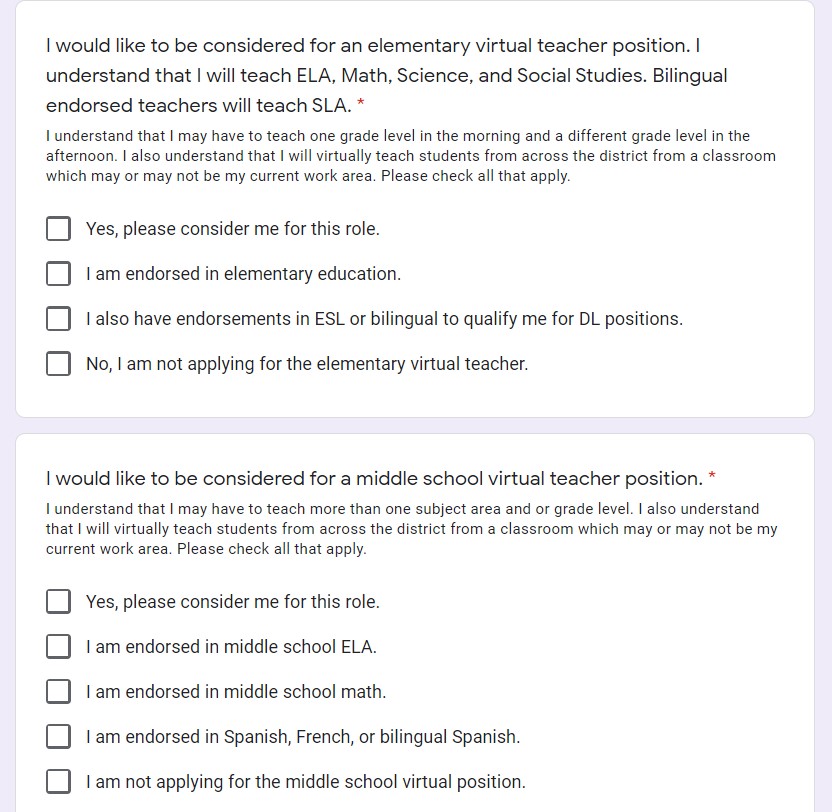
Both districts were going to require a significant number of teachers that would be assigned to remote teaching positions as a result of surveys of families during the summer of 2020, and this resulted in the need to move staff members into positions different from those in which they had originally been assigned.
From these initial experiences, the following keys to successfully navigating this COVID-19 environment emerged:
- Listening – Having relationships already in place prior to the crisis provides a strong foundation for success. Then, it is critical for leaders to intentionally build time in their schedules to be in schools listening to staff members concerns and challenges and questions.
- Empathy – School leaders must put themselves in the shoes of others from staff members to students to parents. When a leader can deeply understand the challenges (and feelings) that others face, they are able to craft solutions that better address a wider range of issues, and they are better able to communicate those solutions to stakeholders.
- Collaboration – Collaboration among and with union leaders, board members, and administrators on a consistent and ongoing basis is critical to creating solutions that will meet the needs of each school district as well as successfully implementing those solutions.
- Articulate why – While specific people may not always like certain decisions, if they understand the rationale behind the decision, how it benefits students, and why it is a fair decision and/or a good use of limited resources, they will typically accept, and even support, the decision.
- Know the law – The pandemic has brought with it unique scenarios related to the Americans with Disabilities Act (ADA) and the Family Medical Leave Act (FMLA). Additionally, the Families First Coronavirus Response Act resulted in additional, important legal parameters for school leaders to know. As is mentioned in the discussion, school law firms have provided a significant amount of ongoing, free professional development to support school leaders since the start of the pandemic.
In thinking about the long-term take-aways for the future of education, the following items were identified as being important areas of emphasis in a post-COVID-19 world of learning:
- Emphasize learning and de-emphasize seat time; Focus on supporting all students with achieving outcomes
- Continue focusing on the importance of social and emotional learning
- Be flexible
- Be creative
- Continue to foster an “all-hands on-deck” culture, including having families be integrated into our learning processes
- Remind teachers and staff that they won’t be able to be everything to everyone and support them in being the best that they can be right now.
Launching Amplifying Solutions
The Department of Leadership, Educational Psychology, and Foundations (LEPF) in the Northern Illinois University College of Education has joined forces with the Illinois P-20 Network to launch a series of videos, web-based events, and blog posts on important topics that have been identified by current teachers and administrators who are also graduate students in and alumni of LEPF programs.
The videos, events and blog posts that result from this partnership will be available publicly, and educators are encouraged to share this content throughout their professional networks.
Initial episodes are being recorded at this time, and content will begin being posted this week both in the Newsfeed of the P-20 Network website and on the P-20 Network YouTube Channel.
November 2020An Integrated, Comprehensive Approach to Career Readiness
Maine Township High School District 207, located in Park Ridge and Des Plaines, Illinois just north of O’Hare Airport, has developed a comprehensive approach to career readiness with its Integrated Career Services Team and their work with students, teachers and counselors, and community partners.
A meaningful career experience for
Ken Wallace, Maine 207 Superintendent
each student, each year.
Over the past five years, Maine 207 has focused on the development of career readiness that is:
- accessible for all students and for each student
- integrated throughout the school day
- diverse in experiences from guest speakers in classes and clubs to paid internships
- aligned with workforce needs in our communities and is aligned with students’ interests and passions
- engaging for community members and organizations through their partnerships with the school district and their work with students
Connecting with Community Partners
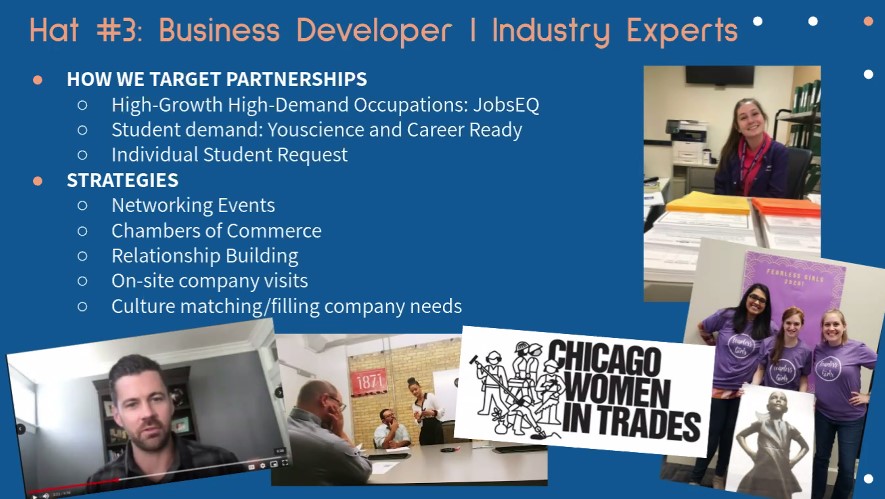
In addition to the superintendent, the district’s leadership team, and the high school principals, the Integrated Career Services Team provides a very important public face for Maine 207 with the community. The Integrated Services Team creates and sustains relationships with business partners that engage in everything from serving as guest speakers to providing full internship experiences with students. To date, Maine 207 has developed a network of 700 community partners. Acknowledging that this number and range of partnerships may not be the same in our diverse communities across Illinois, all school districts already have relationships with businesses and community groups. Those relationships can and should be leveraged into real partnerships to support student learning generally and career experiences specifically.
Intentional Planning that Builds Over Time for Students
As can be seen in the two images below from the Maine 207 Integrated Career Services Team, the district’s work around career readiness focuses on long-term planning that extends into the middle schools and that builds upon itself with each passing year of high school.
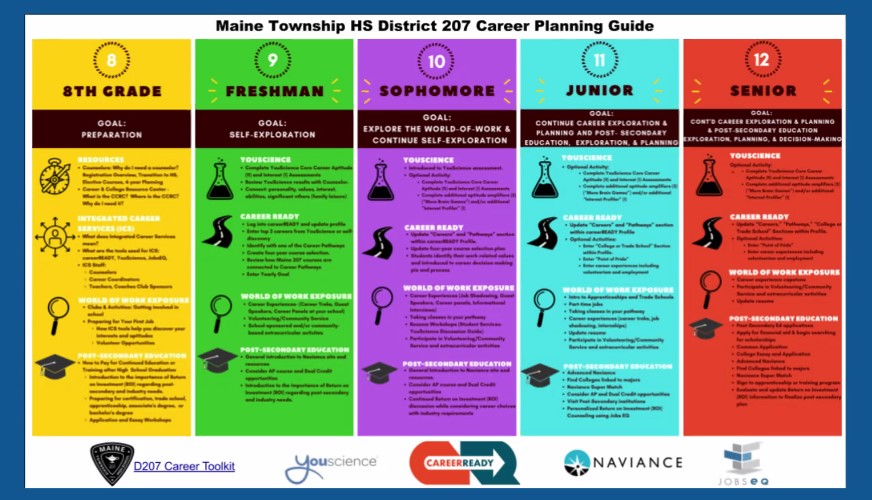
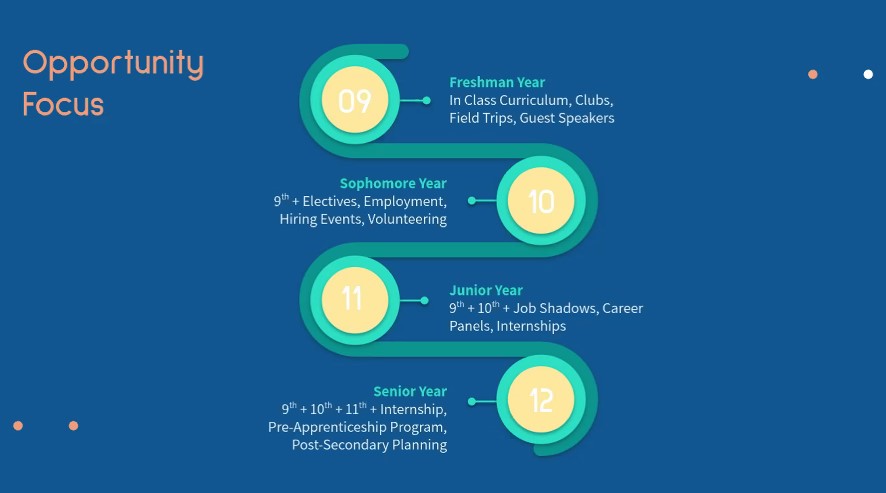
In each of the above examples, the experiences start out as shorter experiences designed, over the course of multiple experiences, to give students an understanding of a broad range of potential careers. This is both developmentally appropriate for most ninth and tenth grade students, and it recognizes that, coming into high school, most students have a very limited understanding of what different careers and workplaces look and feel like in-action. Often times, younger high school students only have an intimate knowledge of the careers of their own adult family members, some other adults that they may know well, and their teachers. Even in these cases, they are likely to only have a limited, more superficial understanding of these careers. The approach taken by Maine 207’s plan is designed to address this head-on by potentially providing students with a strong foundation across many different career pathways. Starting ninth and tenth graders with everything from guest speakers to field trips to volunteer opportunities is also flexible enough to allow individual students to start focusing more specifically on individual career pathways in which they already think they have a greater interest.
Connecting Career Readiness to Engaging Instruction
Importantly, the career readiness activities also integrate with Maine 207’s focus on ensuring that all classes are designed around highly engaging learning. As career experiences are integrated into a wide range of classes, there are opportunities for teachers to more effectively and easily design instruction around authentic learning opportunities that allow students to both learn about careers and to learn concepts, content, and skills more deeply.
A Series and Sequence of Career Experiences
As students move into eleventh and twelfth grades, there are increasingly opportunities for more in-depth work-based learning experiences. These are varied as they allow for the different needs of students, the different natures of different careers and workplaces, and the different requirements and capacities of various partners.
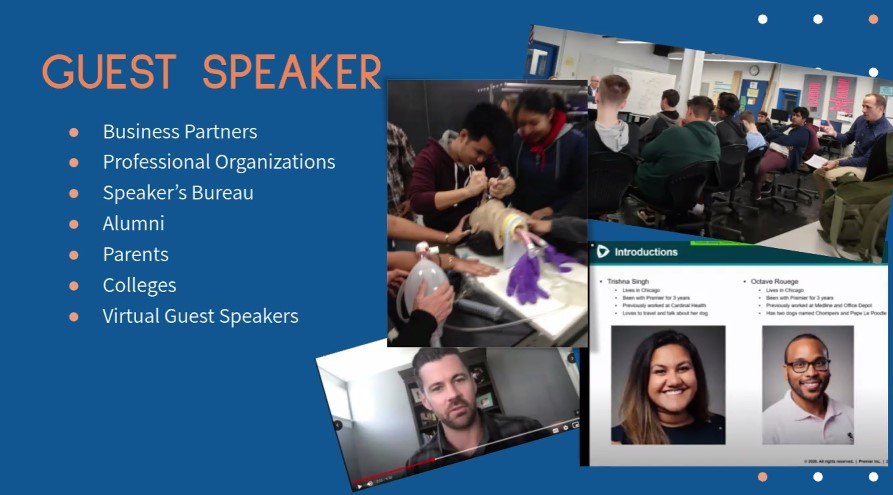
As mentioned earlier, guest speakers are invited in to classrooms throughout the schools and across all grade levels. While Maine 207 has long been a worldwide leader in educational technology including being Google’s original school district partner for Google Apps (known today as Google Workplace), schools far-and-wide have become comfortable with online meetings and classes as a result of the pandemic. The increased access to technology and acceptance of remote meeting and learning tools has made engaging guest speakers with students easier than ever before. Additionally, these same tools allow even more students to benefit from a guest speaker than was previously the case as a result of being able to have more than 25-30 students in the “room” with the students and as a result of being able to record a session with a guest speaker and share it with students later.
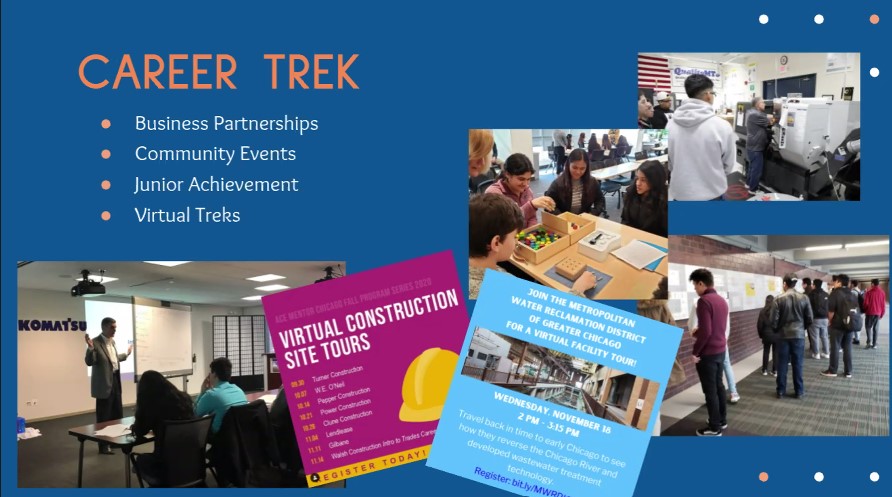
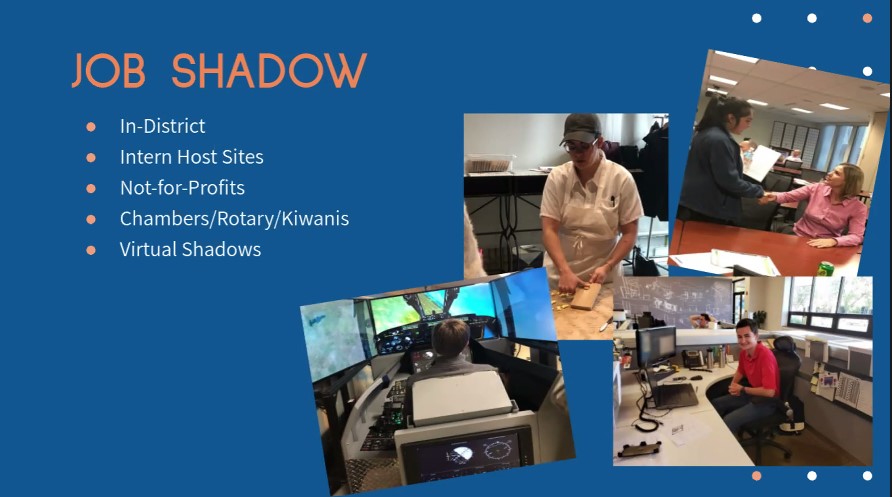
Career Treks and Job Shadowing experiences provide more in-depth opportunities to interact with professionals and to see and understand workplaces. As the slides above from the Maine 207 Integrated Career Services Team remind:
- These experiences can take advantage of other already-established programs, such as Junior Achievement.
- These experiences can and should take place in businesses, but they can and should also take place in other organizations, including other governmental agencies and in our own school districts. (Many Illinois school districts have started job shadowing and internships with their own Operations, Information Technology, and Business Services staffs. Of course, many Illinois school districts also do not have one or more of these key areas in-house as standalone departments due to either their size or available resources.)
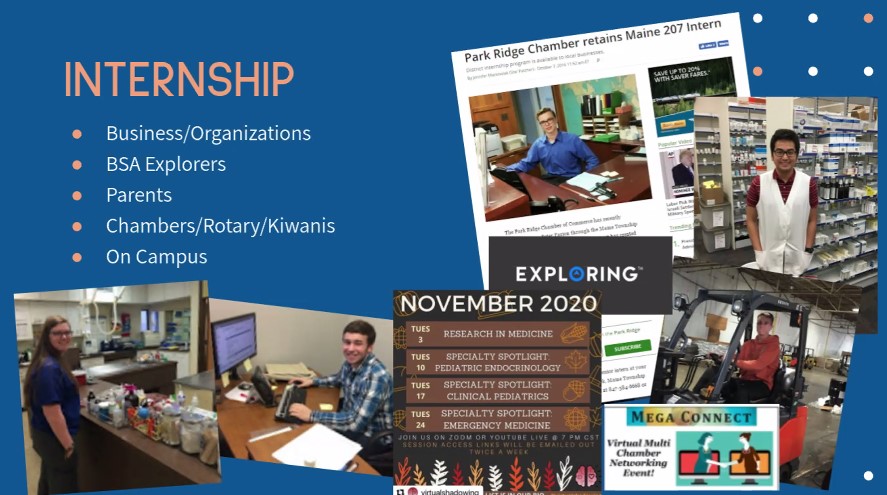
Maine Township High School District 207 offers students both formal and informal internship opportunities. The formal internship is structured around a scheduled class period. In this scenario, the student and the school internship supervisor meet one period per week to check-in and discuss the internship. The informal internship does not include that scheduled class period and weekly check-in. There are a variety of options for when students actually participate in their internships, both during and beyond the school day, and these scenarios are based on both the student’s needs as well as the needs and parameters in place with the organization providing the internship. Maine 207 has approximately 450 students participating in formal internships, and there are additional students participating in informal internships. Between 5 and 15% of the internships have been paid internships.
For more information…
Maine Township High School District 207 Career Exploration website
The Maine 207 Career Exploration website provides up-to-date information on upcoming events as well as dashboards for students and parents, community partners, and staff members. Additionally, staff member information is available, including the opportunity to schedule meetings directly with the team members.
The Integrated Career Services Team at Maine East, Maine West, and Maine South High Schools also actively posts information on Instagram as another medium from which they can communicate with students in addition to the website, emails, and school announcements.
- Maine East CCRC Instagram Account
- Maine West CCRC Instagram Account
- Maine South CCRC Instagram Account
Career Pathways Virtual Trailheads – Denise Hoth – Surgical Instrument Specialist Management
Since students cannot be engaging in face-to-face or on-site work-based learning experiences, we’re bringing people from a wide range of occupations to students remotely. These videos will allow students to learn about their work, the skills that are most important in their work, and to benefit from the advice that these professionals have to offer students.
In this Career Pathways Virtual Trailheads episode, we interview Denise Hoth, who is a surgical instrument specialist that has now also become the manager of a team of surgical instrument specialists. As is discussed in the episode, surgical instrument specialists maintain and repair a wide range of tools used in surgery. Denise became a surgical tech after attending school at Triton College, and as a result of her work in that field, she had the opportunity to move into becoming a surgical instrument specialist. In this episode, Denise explains that her pathway to her current role is one of many potential avenues is as evidenced by the range of background experiences of her team of surgical instrument specialists.
The work that Denise does as a surgical instrument specialist. is part of both the Health & Technology and the Manufacturing, Engineering, Technology, and Trades Career Pathways. Given the time she spends managing financial, operational, and human resources issues, her work is also part of the Business & Finance Career Pathway.
In this episode, Denise explains the nature of the work that surgical instrument specialists do each day, including their working environment in the mobile service labs in the box truck that each surgical instrument specialist on her team drives. Denise explains how it is important that everyone in this role has strong mechanical skills, and that it is important to have integrity, strong verbal communication skills, and be able to work independently. Denise also stresses that this is a field with quite a bit of opportunity, and that a focus on customer service is the number one priority for each employee in her company.
Watch this Career Pathways Virtual Trailheads video with surgical instrument specialist and manager Denise Hoth.
To keep up-to-date as new Career Pathways Virtual Trailheads videos are released:
- Follow the P-20 Network on Twitter
- Subscribe to the P-20 Network YouTube Channel
Career Pathways Virtual Trailheads – Miles Robinson – VR QA Analyst
Since students cannot be engaging in face-to-face or on-site work-based learning experiences, we’re bringing people from a wide range of occupations to students remotely. These videos will allow students to learn about their work, the skills that are most important in their work, and to benefit from the advice that these professionals have to offer students.
In this Career Pathways Virtual Trailheads episode, we interview Miles Robinson, who is a Quality Assurance (QA) Analyst on Facebook’s Oculus team. Oculus has been widely regarded as the leading virtual reality (VR) headset technology, and the QA team plays an incredibly important role in trying to minimize the bugs that are released in the complex combination of hardware and software. Miles grew up in Chicago and attended Whitney Young High School and studied pre-law as an undergraduate while also learning coding and software development, building on a long-time interest in computers and information technology (and video games). After earning his Bachelor’s Degree, Miles engaged in a submersive experience to learn software development in great detail that led to his career in IT and ultimately to his current role at Facebook.
The work Miles does on a daily basis is part of the Information Technology Career Pathway.
In this video, Miles stresses the importance of being adaptable and a team player. Miles also emphasizes that coding is not easy. It is complex work that requires a significant amount of study and a high degree of perseverance. At the same time, Miles strongly suggests that if you believe in yourself and do the hard work, you can be successful with this type of job.
To keep up-to-date as new Career Pathways Virtual Trailheads videos are released:
- Follow the P-20 Network on Twitter
- Subscribe to the P-20 Network YouTube Channel
P-20 Network Fall Virtual Meeting
Like the Spring 2020 P-20 Network Meeting, the Fall 2020 Meeting has also been moved to an online asynchronous event. Despite again missing out on face-to-face, real-time interactions, we are excited to bring you the relevant presentations that have been requested.
Each of the presentations below links to a video on the P-20 Network YouTube Channel.
Welcome – Thinking about Engagement Networks
Dr. Rena Cotsones, Chief Engagement Officer & Senior Associate Vice President, Northern Illinois University
College & Career Readiness – College & Career Pathways
An Overview of Career & Technical Education and Perkins V from ISBE & ICCB – Natasha Allan, Director for Career & Technical Education, Illinois Community College Board; Marci Johnson, Director of Career & Technical Education and Innovation, Illinois State Board of Education
Bringing Work Home: A Framework for Virtual Work-Based Learning (Also presented for the Forum for Excellence 2020) – Heather Penczak, Policy & Program Manager, Education Systems Center at Northern Illinois University; Carl Schneider, Fellow, Education Systems Center at Northern Illinois University; Nikki James, Practera at Northeastern University
Career Pathways Virtual Trailheads
Career Pathways Virtual Trailheads YouTube Playlist
Suggest a Guest
College & Career Readiness – Dual Credit
“How does a teacher get a dual credit endorsement in Illinois?” – Dr. Jenny Parker, Associate Vice Provost for Educator Licensure and Preparation, Northern Illinois University
Dual Credit Teacher Professional Development Plans – Alauna McGee, Director of Early College Opportunities, Heartland Community College
Equity & Opportunity
Parent University: Key Components and Getting Started – Susana Das Neves, Director of Illinois Migrant Education Services, Northern Illinois University
Research & Data
Illinois Postsecondary Profiles – Launch of Path 2 – Occupational Profiles – Charlie Rosemond, Data & Outcomes Manager, Education Systems Center at Northern Illinois University; Dr. Jason Klein, Director of P-20 Initiatives, Northern Illinois University
P-20 Research & Data Collaborative – Overview + State/Federal Projects – Dr. Alan Clemens, Director, NIU P-20 Research & Data Collaborative; Dr. Ben Creed, Assistant Professor, College of Education-Northern Illinois University; Dr. Kelly Summers, Associate Professor, College of Education-Northern Illinois University
P-20 Research & Data Collaborative – Working with Local Organizations: Perspectives from Superintendents – Dr. Steve Epperson, Superintendent, Paw Paw CUSD271; Dr. Lynn Gibson, Superintendent, Paw Paw CUSD271
For more information and to be part of the conversation of the P-20 Network:
- Subscribe for free to our every-other-week P-20 Network Newsletter
- Follow the P-20 Network on Twitter
Career Pathways Virtual Trailheads continues expanding
From Broadway to the lab and from the courtroom to the construction site, we are excited to bring work-based learning activities to our students as they learn at home and to provide relevant, ready-to-use resources for teachers to use with students. Share the Career Pathways Virtual Trailheads series with your teachers and students!
As we start the 2020-2021 school year, we are creating and publishing new episodes. If you have a suggestion for a potential guest for a Career Pathways Virtual Trailheads episode, please share that with us using this Career Pathways Virtual Trailheads Guest Recommendation Form.
September 2020Learning – remote & in-person across the P-20 Network
As the 2020-2021 school year begins in never-seen-before fashion, school districts and postsecondary institutions are each determining the best ways to balance the needs of keeping students and staff members safe, meeting the demands of their stakeholders, and supporting students with learning and teachers and faculty with teaching.
Over the past year, as part of the NIU P-20 Research & Data Collaborative, Illinois P-20 Network staff have been deeply involved in a number of statewide research projects on topics ranging from early childhood education through postsecondary student performance. In an effort to best serve the Illinois P-20 Network, through conversations with leaders of P-20 Network partners, it has become increasingly clear that one way in which the P-20 Network can support its partners is by collecting and providing access to real-time data. To this end, P-20 Network staff have collected data from partners’ websites on the current status of their remote versus in-person learning plans for the start of the 2020-2021 school year. While the Illinois State Board of Education has also created a similar tool for analyzing remote versus in-person learning, it only includes data from about 75% of the state’s school districts that responded to ISBE’s survey request.
This data below is provided separately at each level – elementary school, middle school, high school, and postsecondary. In conducting the data collection and analysis, the P-20 Network team quickly understood that many school districts are approaching their remote and hybrid learning models in complex ways, and this led to the presentation of data in this way.
Below, there are 4 slides of data with a chart and map at each level that you can click through:
- Postsecondary Institutions
- High Schools
- Middle Schools
- Elementary Schools
Postsecondary Institutions
High Schools
Middle Schools
Elementary Schools
If the data for your organization is inaccurate, please let us know by emailing the Illinois P-20 Network.
Over the coming weeks, we will be seeking out additional data, including trying to collect the cost of COVID-19 thus far on each of your institutions, and we will be refining and improving these type of data visualizations moving forward. We look forward to bringing you more useful data in ever-more usable formats in order to best support organizations across the Illinois P-20 Network.
August 2020