

Career Pathways Virtual Trailheads – Laura Rice – Microbiologist
 Since students cannot be engaging in face-to-face or on-site work-based learning experiences, we’re bringing people from a wide range of occupations to students remotely. These videos will allow students to learn about their work, the skills that are most important in their work, and to benefit from the advice that these professionals have to offer students.
In this Career Pathways Virtual Trailheads video, we interview Laura Rice, a microbiologist who holds a PhD., has over a dozen patents, and has published dozens of technical articles. Laura works for the Nalco Water division of Ecolab, a very large international corporation. In Laura’s role, she leads teams that solve problems in the Paper and Pulp industry to ensure that machines can work efficiently in creating everything from office paper to the cardboard used in pizza boxes. Through these efforts, there is less waste, which not only increases profitability for companies, but it also results in environmental benefits as a greater percentage of the trees harvested for paper turn into product rather than end up wasted.
As a microbiologist working in the paper industry, Laura’s work would be classified as being in either the Agriculture Food, and Natural Resources and/or the Manufacturing, Engineering, Technology, and Trades Career Pathways.
During the interview, Laura talks about being a shy student who was afraid to take the risk to ask questions in class, and she encourages all students to ask teachers at all levels for help. She highlights many of the essential skills that are vital to success in her workplace stressing that it is important to be a problem solver and to be persistent in your efforts. Above all else, Laura tells students that collaboration and communication are critical each day. When thinking about entry level positions that students will have they begin their careers, Laura reminds students that regardless of the task on which they are working, it is important to understand why it is important and to always welcome feedback as an opportunity to learn and improve.
Watch this interview with microbiologist Laura Rice.
To keep up-to-date as new Career Pathways Virtual Trailheads videos are released:
- Follow the P-20 Network on Twitter
- Subscribe to the P-20 Network YouTube Channel
Career Pathways Virtual Trailheads – Arthur Mingo – Attorney
Since students cannot be engaging in face-to-face or on-site work-based learning experiences, we’re bringing people from a wide range of occupations to students remotely. These videos will allow students to learn about their work, the skills that are most important in their work, and to benefit from the advice that these professionals have to offer students.
In this Career Pathways Virtual Trailheads video, we interview Arthur Mingo, an attorney who has recently started his own practice in Chicagoland. Arthur goes into great deal about law school teaching students to think like attorneys and about the process of taking and passing the Bar Exam. Arthur also talks about how, like a doctor who is a general practitioner or family doctor, an attorney with a new, small practice will likely take a wide variety of cases before possibly specializing in a particular area of legal work.
As an attorney, Arthur’s work would be classified as being in the Human and Public Services Career Pathway.
Arthur stresses a number of important points to students when considering becoming an attorney. First, Arthur emphasizes that the work of most attorneys most of the time does not look like it appears on television and in movies. Second, Arthur points out that while his degree from the Law School at Southern Illinois University might not be considered as prestigious as an Ivy League Law School, he learned from the same books and got a very strong legal education while also earning scholarships and strengthening his financial future.
Arthur also notes that being argumentative is not the most important skill to becoming a good attorney. Rather, it is important that one truly listens to their clients, returns phone calls, and is a strong reader and writer.
Learn more about what it’s like to be an attorney by watching this interview with Arthur Mingo.
To keep up-to-date as new Career Pathways Virtual Trailheads videos are released:
- Follow the P-20 Network on Twitter
- Subscribe to the P-20 Network YouTube Channel
Career Pathways Virtual Trailheads – Elizabeth Stanley – Broadway Star
Since students cannot be engaging in face-to-face or on-site work-based learning experiences, we’re bringing people from a wide range of occupations to students remotely. These videos will allow students to learn about their work, the skills that are most important in their work, and to benefit from the advice that these professionals have to offer students.
In this Career Pathways Virtual Trailheads video, we interview Elizabeth Stanley, who is currently starring in the production of Jagged Little Pill on Broadway in New York City. Elizabeth grew up in Western Illinois attending Camp Point Central High School, and she holds a Bachelor’s Degree from Indiana University. In addition to singing, dancing, and acting in live theater productions, Elizabeth has appeared in many television shows. From her work in regional theater to the biggest stages in the United States, Elizabeth’s job is her dream job and a dream for many. In this interview, though, Elizabeth also stresses all of the related careers that are necessary to create and maintain live theater, providing opportunities for people with all kinds of interests and skills to be involved in a career in the Arts.
As an actress, Elizabeth’s work would be classified as being in the Arts & Communications Career Pathway.
In addition to describing what life looks while performers are looking for jobs as well as once they are in a production, Elizabeth offers a number of key tips for students that are not only important for those considering a career in the Arts but that align with the Essential Skills and are relevant to all Career Pathways.
- Be as prepared as possible
- Be Self-Motivated
- Be resilient and persevere; Develop one’s self-esteem
- Be thoughtful with one’s finances and save regularly
Watch our P-20 Network interview with actress Elizabeth Stanley on YouTube.
To keep up-to-date as new Career Pathways Virtual Trailheads videos are released:
- Follow the P-20 Network on Twitter
- Subscribe to the P-20 Network YouTube Channel
Career Pathways Virtual Trailheads – Brigette Wolf – Snack Food Innovator & Leader
Since students cannot be engaging in face-to-face or on-site work-based learning experiences, we’re bringing people from a wide range of occupations to students remotely. These videos will allow students to learn about their work, the skills that are most important in their work, and to benefit from the advice that these professionals have to offer students.
In this Career Pathways Virtual Trailheads video, we interview Brigette Wolf, the Head of Snack Futures Innovation at Mondelez International. In Brigette’s role, she works with and learns from customers and retailers in order to understand their needs, and she leads a diverse team that seeks to create new products that will be exciting to consumers with an emphasis on new ideas and sustainability. Brigette also provides her advice to students about beginning their own career journeys.
As an executive in the food industry, Brigette’s work would be classified as being in either the Agriculture Food, and Natural Resources and/or the Business/Finance Career Pathways.
Brigette specifically identifies that critical thinking, the ability to listen, and being good at asking questions are all essential skills that are necessary in her work. In a job that routinely sees her traveling around the world, literally to different continents each week and back home on the weekends, she also must be able to work with both teammates and customers from around the world. Brigette has identified that having the “agility to learn” is vital to her ongoing success, and like each of the Career Pathways Virtual Trailheads guests before her, she cites work ethic is being a must-have characteristic to achieve in her career.
Click here to watch this video on YouTube.
To keep up-to-date as new Career Pathways Virtual Trailheads videos are released:
- Follow the P-20 Network on Twitter
- Subscribe to the P-20 Network YouTube Channel
Career Pathways Virtual Trailheads – Jim Daly – Chemist & Corporate Leader
Since students cannot be engaging in face-to-face or on-site work-based learning experiences, we’re bringing people from a wide range of occupations to students remotely. These videos will allow students to learn about their work, the skills that are most important in their work, and to benefit from the advice that these professionals have to offer students.
In this Career Pathways Virtual Trailheads video, we interview Jim Daly, the Vice President of Global FloraLife and Corporate Research at Smithers-Oasis. Among other products, FloraLife is the company behind the packets of flower food that come with bouqets of flowers at the supermarket, and in this video, Jim talks about everything from the science behind extending the storage life of apples to the process of innovation.
As a chemist-turned-executive, Jim’s work would be classified as being in either the Agriculture Food, and Natural Resources and/or the Business/Finance Career Pathways.
Jim stresses the importance of consistent hard work over a long period of time as a key to success in any career. He talks about learning as much as possible when you are young and taking advantage of formal learning opportunities, so you can build upon those once you are in the workplace. Jim also emphasizes how exciting it is to innovate and create while also stating that, in his experience, leading people is more complex than solving problems with chemicals.
Click here to watch this video on YouTube.
To keep up-to-date as new Career Pathways Virtual Trailheads videos are released:
- Follow the P-20 Network on Twitter
- Subscribe to the P-20 Network YouTube Channel
Career Pathways Virtual Trailheads – Marco Casalaina – IT Leader & AI Innovator
Since students cannot be engaging in face-to-face or on-site work-based learning experiences, we’re bringing people from a wide range of occupations to students remotely. These videos will allow students to learn about their work, the skills that are most important in their work, and to benefit from the advice that these professionals have to offer students.
In this Career Pathways Virtual Trailheads video, we interview Marco Casalaina, the Senior Vice President – Product – Einstein at Salesforce.com. Marco is in charge of a global team working on Salesforce’s Artificial Intelligence (AI) efforts, and he talks about his work, the most important skills for himself and his team members, and provides advice to students about their own career pathways.
As a computer scientist and executive, Marco’s work would be classified as being in either the Information Technology and/or the Business/Finance Career Pathways.
Marco also discusses the importance of cross-cultural competence as he leads a global team with offices in the United Stands, France, Israel, and India, and he identifies two key skills for students to develop regardless of their particular career interests – communication and creativity.
Click here to watch the video on YouTube.
To keep up-to-date as new Career Pathways Virtual Trailheads videos are released:
- Follow the P-20 Network on Twitter
- Subscribe to the P-20 Network YouTube Channel
Career Pathways – Virtual Trailheads – Exploring Careers Online
With the unprecedented move to remote learning necessary about the shelter-in-place orders tied to COVID-19, the P-20 Network had previously offered suggestions about how career exploration could continue while students are learning at home. From the dialogue that this post generated, we are excited to announce that we are launching a new series on YouTube – Career Pathways Virtual Trailheads.
Since students cannot be engaging in face-to-face or on-site work-based learning experiences, we’re excited to bring people from a wide range of occupations across the Career Pathways to students remotely. These videos will allow students to learn about their work, the skills that are most important in their work each day, and to benefit from the advice that these professionals have to offer students.
Teachers can benefit from the Career Pathways Virtual Trailheads videos in two ways. First, these videos serve as a resource that can be used as we engage students in remote learning in the short-term as well as in online, blended, or traditional learning environments in the future. Second, these videos can provide brief virtual externship experiences for teachers to hear about careers and workplaces outside of education in order to ensure that our instruction is as relevant and engaging as possible for our students and their futures.
For each interview, we will post a corresponding blog post. Videos and blog posts will begin to be shared during the week of March 30, 2020. To keep up-to-date:
- Follow the P-20 Network on Twitter
- Subscribe to the P-20 Network YouTube Channel
Exploring Careers while Learning at Home
We’re collecting questions about Learning at Home from teachers at all levels, and we’ll be working with experts to help get these questions answered. If you have questions, please provide them here.
Websites listed in this post are listed as examples because they are already in common use in Illinois. There is no endorsement of these companies or their services by the P-20 Network or Northern Illinois University.
Along with the physical closure of schools, work-based learning experiences have also been stopped for students. From its March 16, 2020, guidance document, the Illinois State Board of Education (ISBE) clarified that students cannot participate in work-based learning experiences in the field with workplace partners.

Does this mean that students cannot meaningfully engage in exploring careers while learning at home? Actually, E-Learning presents a wonderful opportunity to engage in further career exploration for students. Ideas for learning more about careers while learning at home include:
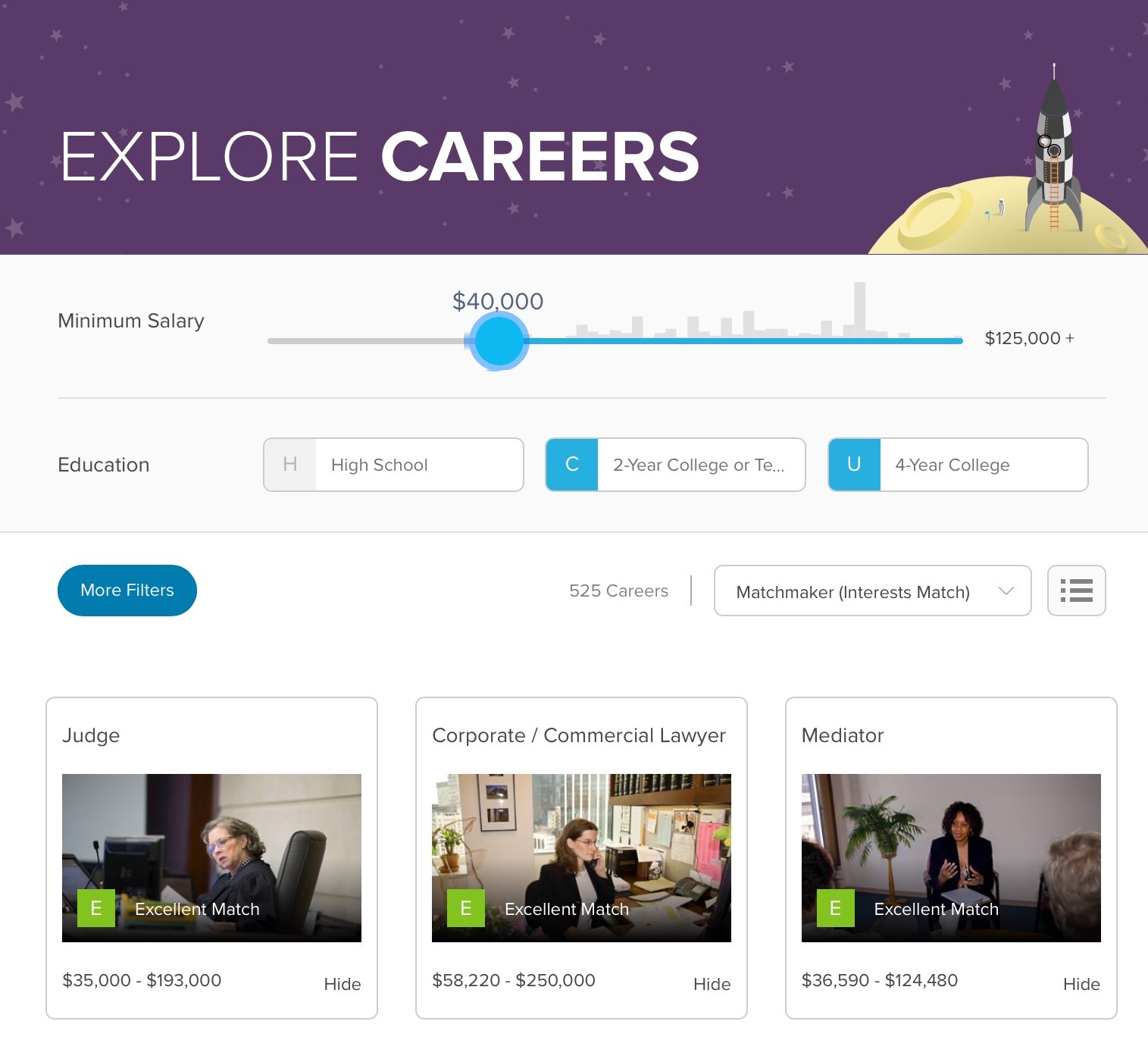
- Using online tools to conduct their own research about careers about which they would like to learn more, including what type of postsecondary education to obtain a position in the career, what the workplace environment looks and feels like, how much money one is able to earn both when new in the career and later with more experience, and most importantly, how the career matches with the students’ personal and career interests as well as with regional occupational needs. If your school district uses a tool like Xello or YouScience, now is a great time to have students dive into their results and do some additional exploration.
- Students can also conduct interviews or do additional research into the more behind-the-scenes elements of different careers in which they might be interested to fully understand what those careers entail on a daily basis. In many cases, students have a deeper understanding of the careers of their parents or other adult family members as well as teachers. Beyond that, most students do not see the daily inner-workings of most careers. Movies and television not only leave out most careers and focus on specifically high-profile careers in very dramatic ways, such as law enforcement, paramedics, and frontline medical professions, such as doctors and nurses. Even with the large number of movies and television shows focused on these careers, large portions of the daily work routine in those fields are typically left out. Hours of documentation and paperwork each day is part of real life, but it does not make for dramatic viewing. Even when other careers are highlighted in movies and television, such as the scene below from Apollo 13 that shows engineers tackling a life-threatening problem, leave out the years of detailed, mundane creation and testing that these same engineers did prior to the launch of Apollo 13.
- Use the curriculum of your course as a jump-off for career exploration – As we replace some of the face-to-face collaborative activities, labs, and other lessons that we would have been doing with in-person teaching that we have not yet figured out how to effectively move online or to students’ homes, take advantage of this opportunity to use your curriculum as a jumping off point for further exploration. Certainly, it is a great opportunity to explore the curriculum further and/or in unique personalized ways with independent research and creative, original products. It is also a great opportunity for students to explore careers related to this curriculum. While this may be a teacher-initiated career exploration, there is a great deal of room for individual student choice within this work as well as for students to create a wide range of products that can inform other students in other places and in the future about career options. This also a great opportunity for community partners of local school districts to provide information about their careers via video chats using tools like YouTube Live. (It takes 24 hours for YouTube to verify an account to allow it to broadcast live, so one does need to plan in advance).

- Remote College & Career Counseling – Despite the fact that nearly all teachers and staff and counselors and advisors are working from home, in some ways, this is a better opportunity than a normal March or April to provide students with during-the-day college and career counseling. In many cases, engaging with students and parents together may be easier than it would normally be, as well. Remote college and career counseling can certainly take advantage of today’s technological tools, live video chat through Google Hangouts Meet, Microsoft Teams, or some other tool, but it can also take place via a phone call, enabling nearly all students and families to take advantage of this opportunity. In the example below from Maine West High School, Maine Township High School District 207 staff members walk students and families through the steps that they have created, and which others can replicate, to provide remote college and career counseling. (It is important to note that, in addition to the video here, the slide deck is publicly available and has been widely shared on social media to engage students, such as this Instagram post from Maine East High School.)
Lake County Tech Campus – Creating a Team-Based Challenge
The Lake County Tech Campus provides a wide range of Career and Technical Education (CTE) programs to high school students from throughout Lake and McHenry Counties in Northeastern Illinois. Education is one of the many high quality career areas in which programming is offered at Tech Campus, with a team of three teachers who provide instruction for juniors and seniors in high school. These students, in turn and alongside their professional teachers, provide instruction and learning opportunities three days per week for early childhood students in the specifically designed early childhood classrooms at Tech Campus.
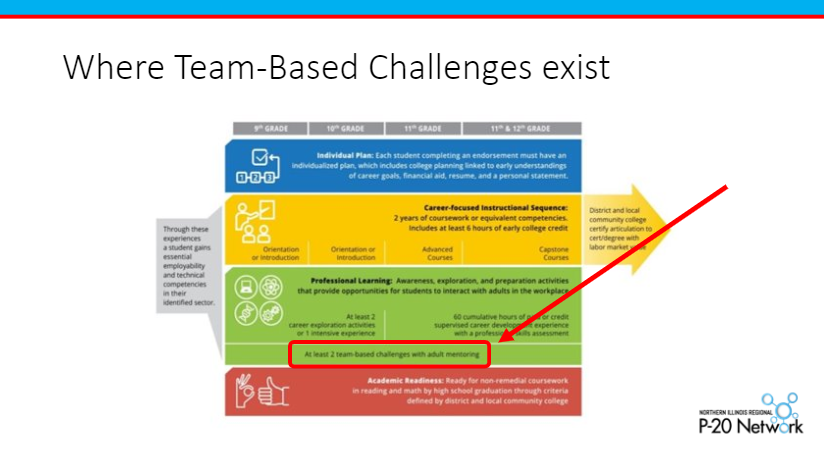 As part of this work, the Education teacher team decided to incorporate Team-Based Challenges from the Illinois Career Pathway Endorsement model, and the P-20 Network team both facilitated the instructional planning and participated in this effort alongside the Education teachers. The Education teachers identified two potential real-life, complex problems of practice that they believed an in-depth Team-Based Challenge would help their high school students learn and solve and through which they could develop a deeper understanding as potential pre-service teachers. Together, we spent one entire “professional development day” building out the Team-Based Challenge.
First, we explored the key College & Career Pathway Competencies that would be taught and on which students would be assessed. Specifically, both the Essential Cross-Sector Employability Competencies as well as the Human and Public Services Career Pathway Competencies (which are currently defined through EDU-specific competencies) were studied and discussed. After examining all of these competencies, the teachers specifically identified the ones that would be best taught and assessed through the Team-Based Challenge.
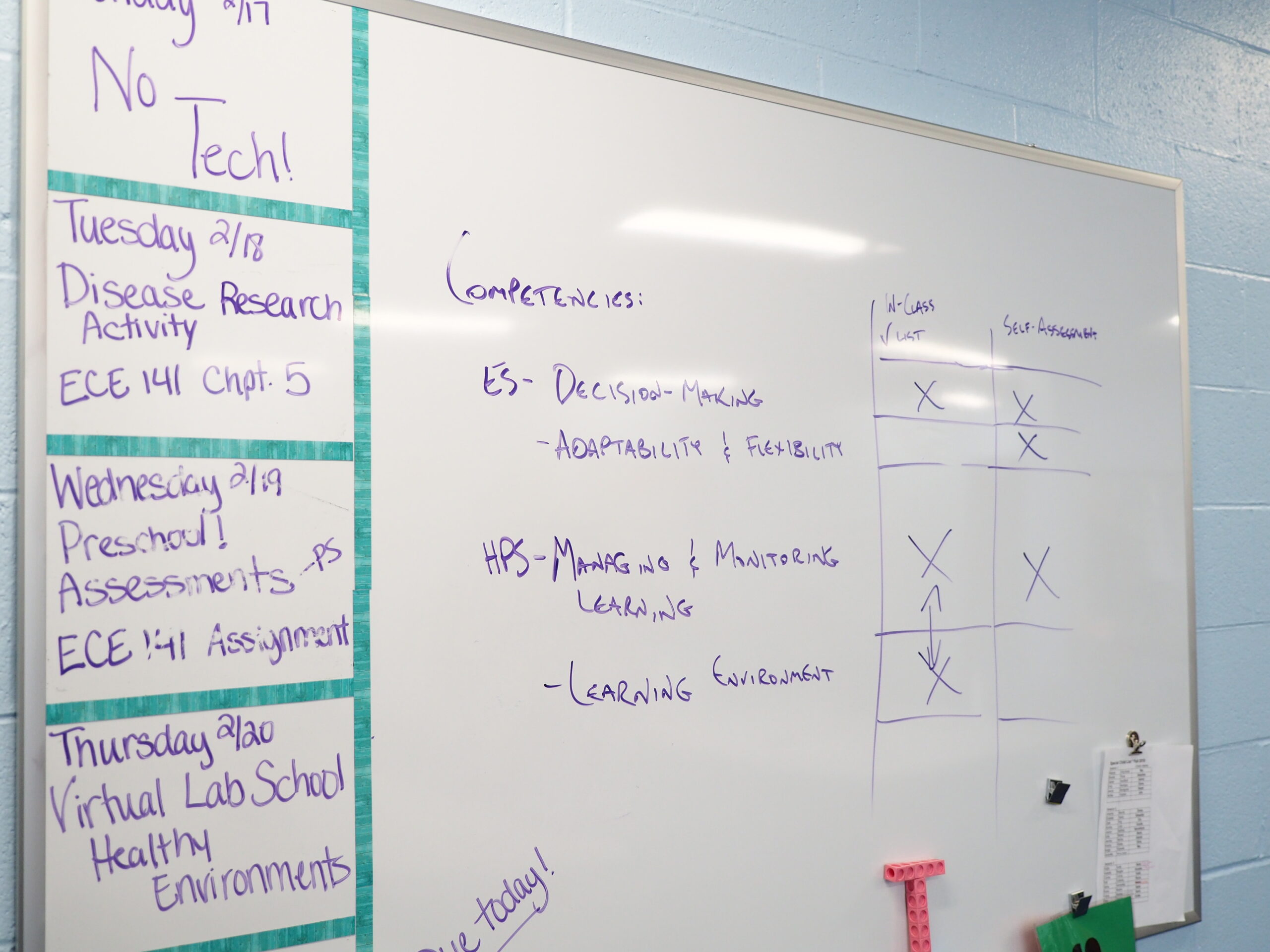
Then, the teachers determined how they would assess each of these competencies as well as, through that discussion, beginning to plan instructional lessons and activities that would be embedded in the Team-Based Challenge.

Finally, using the Backwards Design Model of instructional planning, multiple assessments were fully built-out prior to the end of the professional development workday.
Ultimately, in one day, the teachers learned more about the Career Pathway Endorsements, identified the competencies that would be taught and assessed, created those specific assessments, and outlined a two-week instructional unit that would serve as a Team-Based Challenge.
For more information about Career Pathway Endorsements or to reach about arranging for professional development and planning support around the Career Pathway Endorsements and Team-Based Challenges, please contact either Brooke (bsimon3@niu.edu) or Jason (jason.klein@niu.edu) at the P-20 Network.
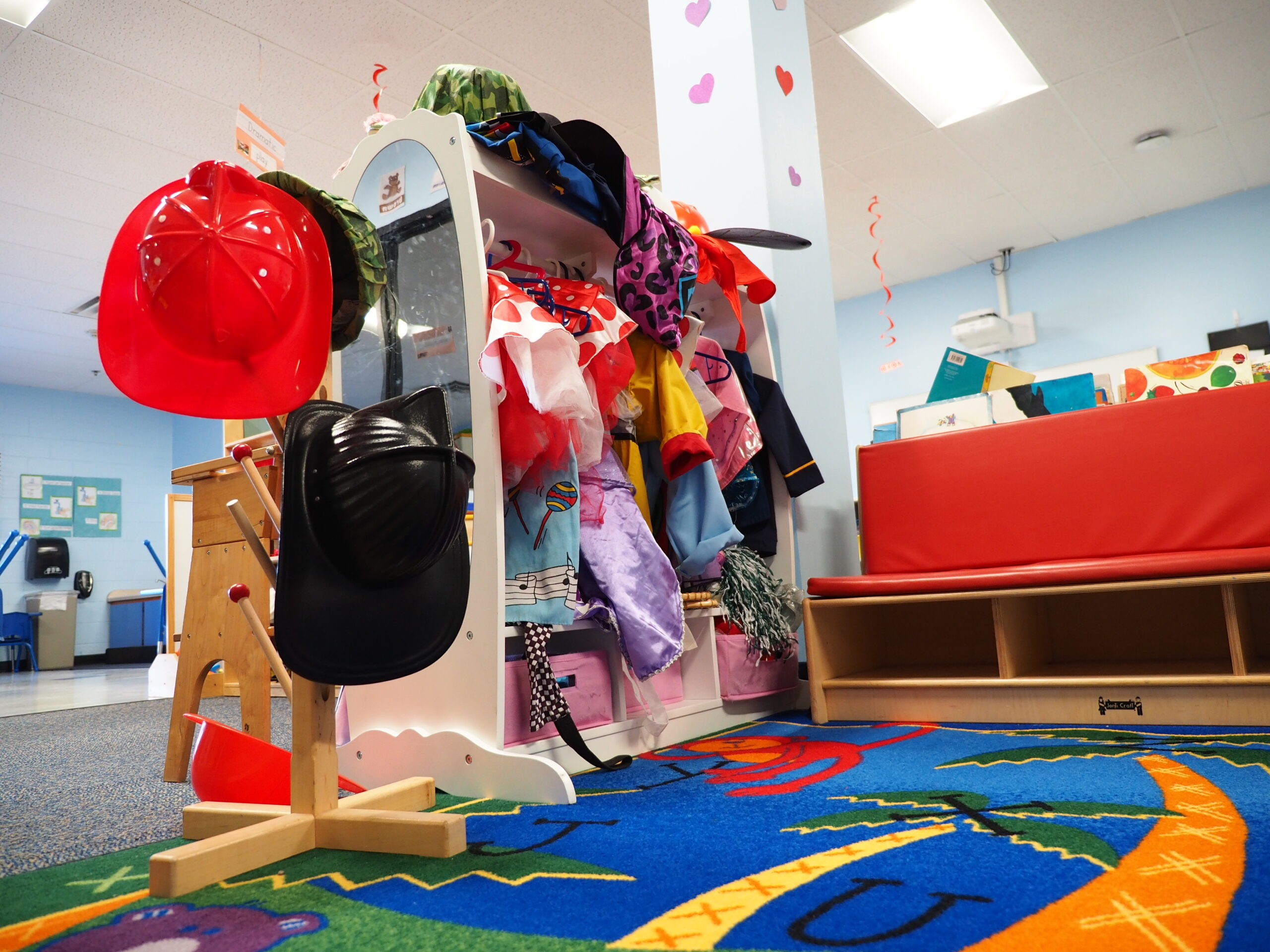
Focusing on Career Pathways with an emphasis on individual students’ plans
Belvidere School District 100 has been focused on putting each piece in place to support students’ engagement with the College and Career Pathways.
One of the early key steps in this work was exploring the “crosswalk” (pictured below) between the Postsecondary and Career Expectations Framework (PaCE), the Illinois State Board of Education’s College and Career Readiness Indicators (CCRI), and the College and Career Pathway Endorsements (CCPE) outlined by the Postsecondary Workforce Readiness (PWR) Act.
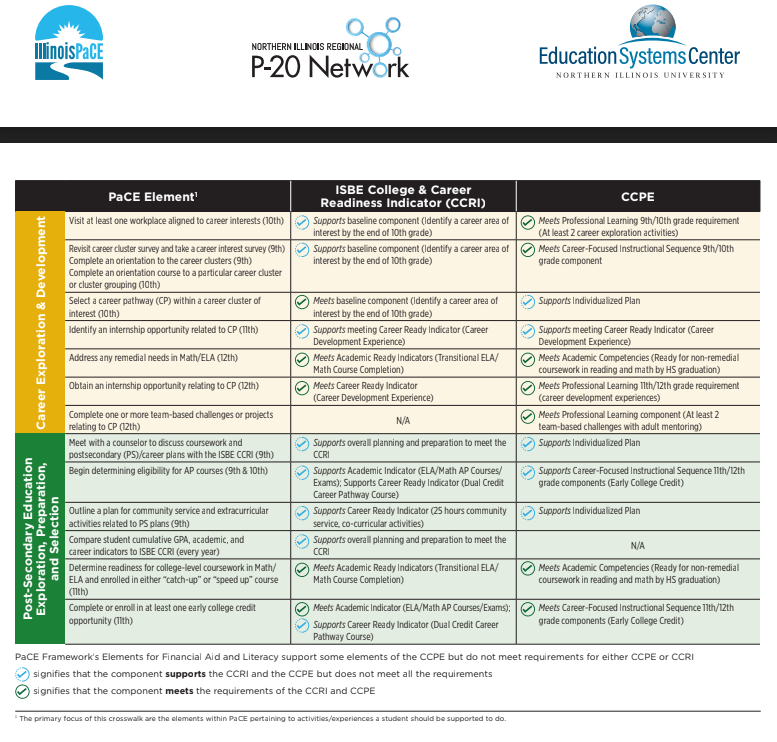
Belvidere School District 100 knew that they wanted to support student learning and exploration with the Career Pathways and to ensure that students had the requisite knowledge and skills to be successful beyond high school – in postsecondary education and in the workforce. Nik Butenhoff, Director of Career Readiness, said the the framework crosswalk, “supported the hunch that we had. This was the evidence that if we have to track the College and Career Readiness Indicator (for the State), if we just go all-in for the Endorsements, we will then land on the work that we needed to support the Indicators.”
Nik goes on to point out that this work is central to the efforts of teachers and administrators in Belvidere to improve learning, “The stuff that the State is giving us; this is good. These frameworks show how its all intertwined with each other. It is not separate initiatives, but it’s all connected.”
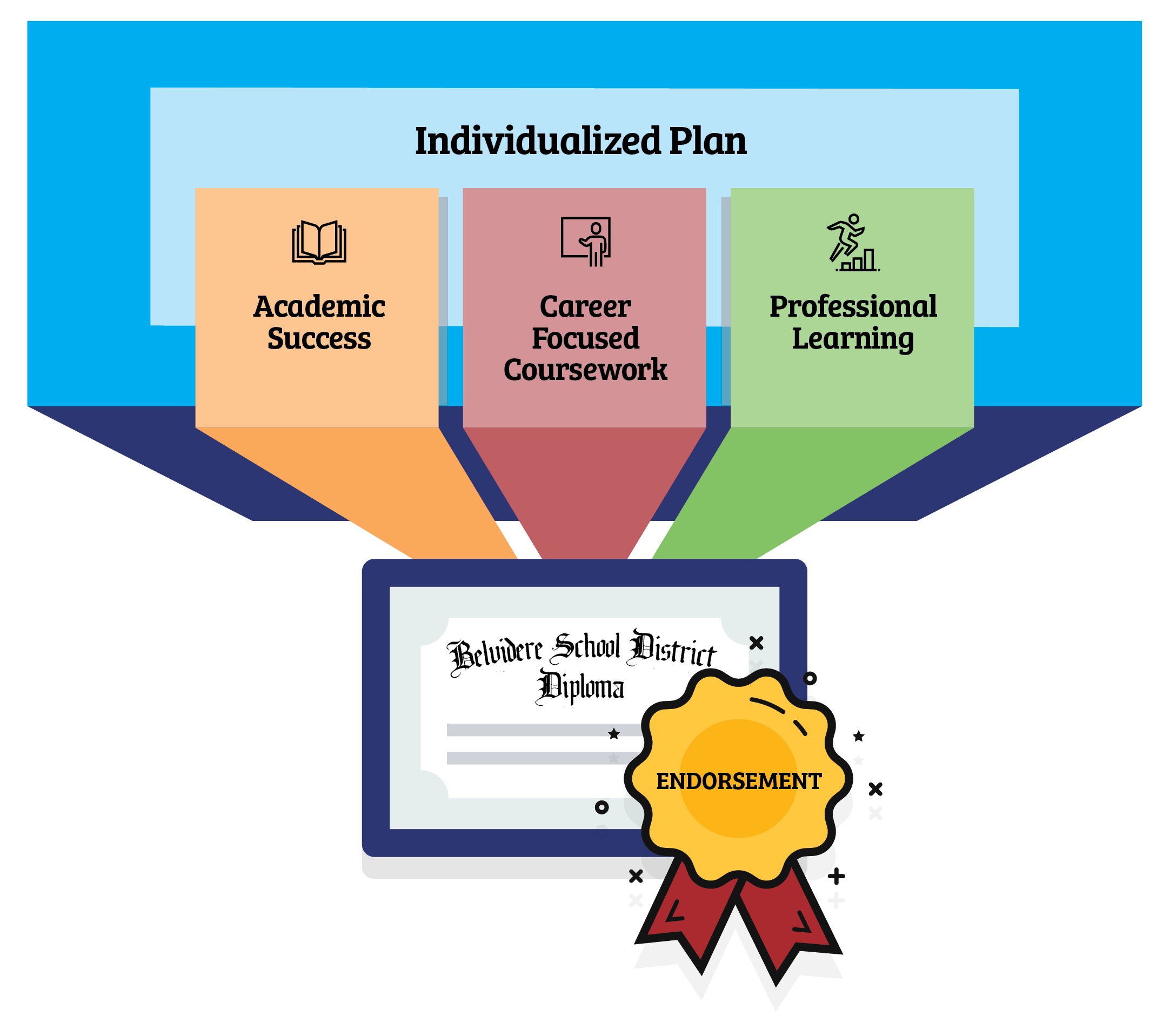
Belvidere School District 100 has developed its own graphic to show the importance of individual planning with each student. The State’s College and Career Pathway Endorsement graphic, which is linked above, also places individual planning at the top of the framework, but the Belvidere viewpoint is to stress it even further as pictured below with the “Individualized Plan” section wrapping around each of the key components.
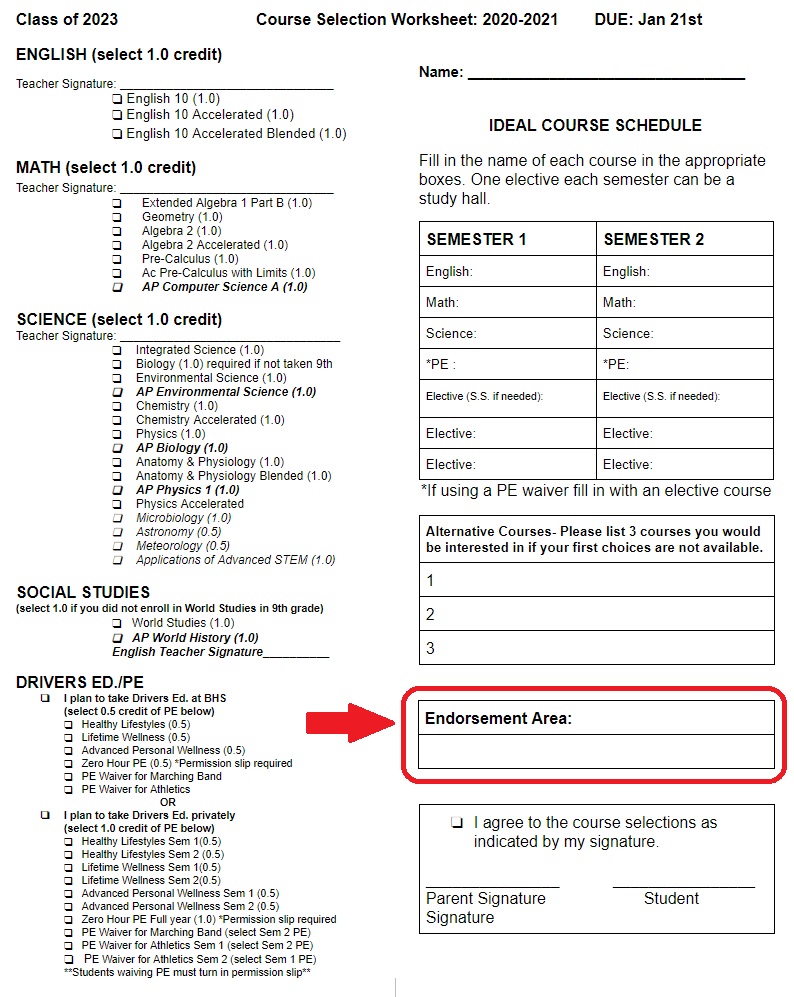
In addition to this, students are asked to be thinking about their College and Career Pathway in a number of different ways. One small, easy, yet very powerful, example of this is on student’s Course Selection Form (pictured below). As student’s consider what courses they are requesting for the following school year, they are also asked to think about their desired College and Career Pathway Endorsement area.
In addition to these strategies, the posters pictured with this post are up in the high schools and the middle schools to help students consider the Pathways as they move through the day, and the District 100 Career Guide is offered to students and families in both English and Spanish.
Possibly the most important component in helping make the College and Career Pathways begin to come alive for high school students in District 100 is that all ninth graders are required to complete a Freshman Careers Course, during which a wide range of career exploration and skill-building activities take place.
January 2020Career Pathways Endorsement – Mapping out the course sequence well in advance in Naperville 203
While the Class of 2020 is the first group of students in the State of Illinois that can earn Career Pathway Endorsements, data gathered across the P-20 Networks suggests that very few students will earn Career Pathway Endorsements this coming spring. At the same time, many school districts are deeply engaged in providing career-focused experiences for students and working toward the full implementation of Career Pathway Endorsements with the following critical elements:
- a sequence of courses aligned to the Career Pathway Endorsement including courses that will offer the possibility of at least 6 hours of postsecondary credit (Dual Credit or Advanced Placement)
- a minimum of 2 Team-Based Challenges that students can experience either through instruction in the aforementioned courses or through extra-curricular activities or other outside experiences
- an in-depth work-based learning experience of a minimum of 60 hours (or 2 micro-internships of at least 30 hours each)
Though, like most school districts, Naperville Community Unit School District 203 does not plan on having students graduate with Career Pathway Endorsements for a few years, the District has already mapped out course sequences for Career Pathway Endorsements. Pictured below is a bulletin board in a hall at Naperville Central High School that outlines two different course sequences for students to work toward an Career Pathway Endorsement in Information Technology.
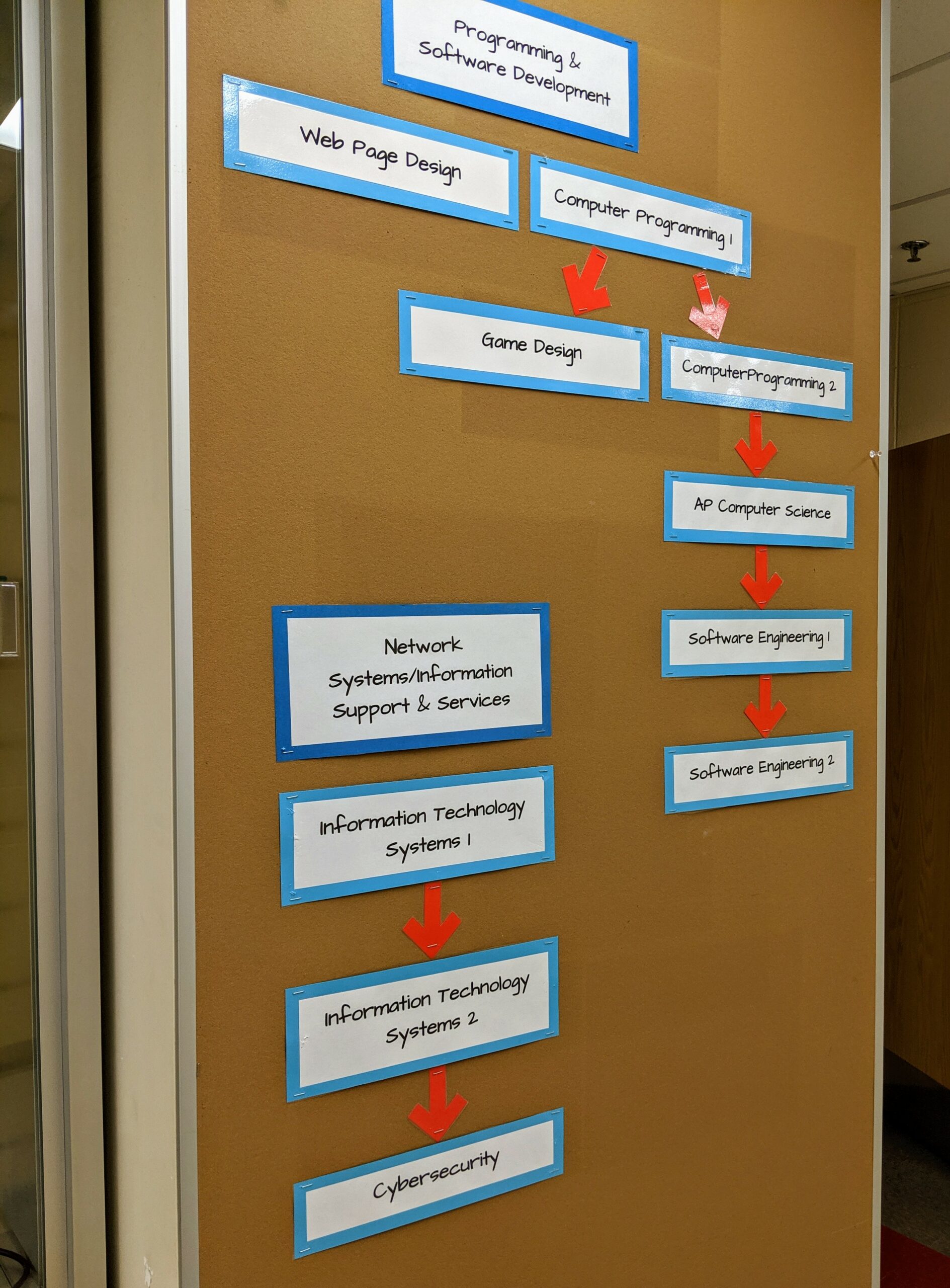
While educators in Naperville continue to build out other critical elements of the Career Pathway Endorsement, from the outset of their high school experience, students can be inspired by and begin to plan to participate in one of these entire course sequences.
There are a few important lessons from this:
- It’s not too early to plan out course sequences, which can be done at any time, even if you are not able to fully implement the course sequence this year.
- Planning a course sequence early can result in being better able to prepare facilities, equipment and supplies, and professional development well in advance.
- Once a course sequence is planned, it can be shared widely with students and families in order to help them both develop a general awareness of Career Pathway Endorsements and to be able to consider specific course sequences as students are selecting courses (and “trying on” different career ideas).
Team-Based Challenges – The Key Elements
At the Fall 2019 P-20 Network Meeting, participants worked together to define the critical elements of a Team-Based Challenge as well as ideas for Team-Based Challenges that can be implemented with partners in our communities within each of the Career Pathways. Following the P-20 Network Meeting, we took the ideas from the meeting to draft a document that outlines the best practice “Elements of a Career Pathway Endorsement Team-Based Challenge.”
A Career Pathway Endorsement Team-Based Challenge is a self-contained exercise that may vary in length and structure ranging from an individual activity to an instructional unit.
A Team-Based Challenge should require students to utilize and demonstrate competency with work-based knowledge and skills as they work to solve an authentic work-based problem as members of a collaborative team.
Career Pathway Endorsement Team-Based Challenges should include the following features:
- Challenges seek solutions to authentic problems that are identified from and/or in collaboration with industry partners, are regionally relevant and globally connected, and result in a real solution that can be applied and implemented in the “real world”. As part of or in addition to the solution/product, students must complete a presentation of their solution and its application to an authentic audience.
- Students work in collaborative groups to solve the problem.
- Students are supported by an expert mentor from the field. If possible, experts should also be present for student presentations at the culmination of the Team-Based Challenge.
- Challenges require students to demonstrate key technical, employability, and entrepreneurial competencies. Successful demonstration of the competencies through a Team-Based Challenge is typically represented through a rubric and/or another form of authentic assessment.
Additionally, we are working with faculty and staff at Northern Illinois University as well as with teachers and administrators in school districts to help develop and document Team-Based Challenges. We look forward to sharing those stories and resources to help with the creation of Team-Based Challenges over the coming weeks and months. In the meantime, if you are interested in developing Team-Based Challenges in order to help further learning toward the Career Pathways in your organization as well as to develop capacity with authentic, problem-based learning, please contact the Illinois P-20 Network, and we will be happy to set-up time for support.
November 2019The Career Development Toolkit from Ed Systems Center
Through a collaboration with the Illinois State Board of Education and the Illinois Department of Commerce and Economic Opportunity, Education Systems Center has released the Career Development Toolkit. The Toolkit is aligned to the frameworks established in the Postsecondary and Workforce Readiness (PWR) Act. The Career Development Toolkit provides a comprehensive framework and roadmap for helping educators through all of the steps and considerations in providing meaningful career experiences – from the creation of internships that align with the Career Pathway Endorsements to thinking through necessary detailed logistics.
For support in using the Career Development Toolkit and in implementing Career Pathway Endorsements, contact us or Heather Penczak at Northern Illinois University’s Education Systems Center.
November 2019Elements of a Team-Based Challenge
A Career Pathway Endorsement Team-Based Challenge is a self-contained exercise that may vary in length and structure ranging from an individual activity to an instructional unit.
A Team-Based Challenge should require students to utilize and demonstrate competency with work-based knowledge and skills as they work to solve an authentic work-based problem as members of a collaborative team.
Career Pathway Endorsement Team-Based Challenges should include the following features:
- Challenges seek solutions to authentic problems that are identified from and/or in collaboration with industry partners, are regionally relevant and globally connected, and result in a real solution that can be applied and implemented in the “real world”. As part of or in addition to the solution/product, students must complete a presentation of their solution and its application to an authentic audience.
- Students work in collaborative groups to solve the problem.
- Students are supported by an expert mentor from the field. If possible, experts should also be present for student presentations at the culmination of the Team-Based Challenge.
- Challenges require students to demonstrate key technical, employability, and entrepreneurial competencies. Successful demonstration of the competencies through a Team-Based Challenge is typically represented through a rubric and/or another form of authentic assessment.
Career Pathway Endorsement Team-Based Challenges are also a strong vehicle for providing opportunities for new partners with school districts. Since Challenges are shorter in duration and do not require significant commitments of time or the need to host students on-site (and the ensuing policy challenges that may come with that), Team-Based Challenges provide a “lighter” way for new partners to work alongside the school district and to have their employees engage with students as experts. With the proliferation of advanced communications technologies in school classrooms, such interactions may be in-person either in school or at the partner’s site through a research trip or online.
A Career Pathway Endorsement Team-Based Challenge can take place within a course that is part of the identified sequence for a particular College & Career Pathway. Challenges can also take place as part of a co-curricular activity.
November 2019Hinckley-Big Rock – #AuthenticLearning with Agriculture and Beyond
Hinckley-Big Rock School District 429 is situated in the countryside between Aurora and DeKalb, Illinois. Hinckley-Big Rock has been a leader statewide in building a strong foundation for all students with career readiness and postsecondary options through its implementation of the HBR Career Readiness Plan. This plan, which builds skills and experiences for students from elementary school through high school, was developed within the school district and is based on the Illinois Postsecondary and Career Expectations (PaCE) Framework.
Not only has Hinckley-Big Rock invested a great deal of time and energy in ensuring that students have experiences and skills to help them make choices about careers and postsecondary learning, but Hinckley-Big Rock also seeks to provide students with authentic learning experiences in which their “classwork” is “real work”. While this is desired across the curriculum and all courses, these efforts are most noticeable within the Agriculture, Food, and Natural Resources Career Pathway.
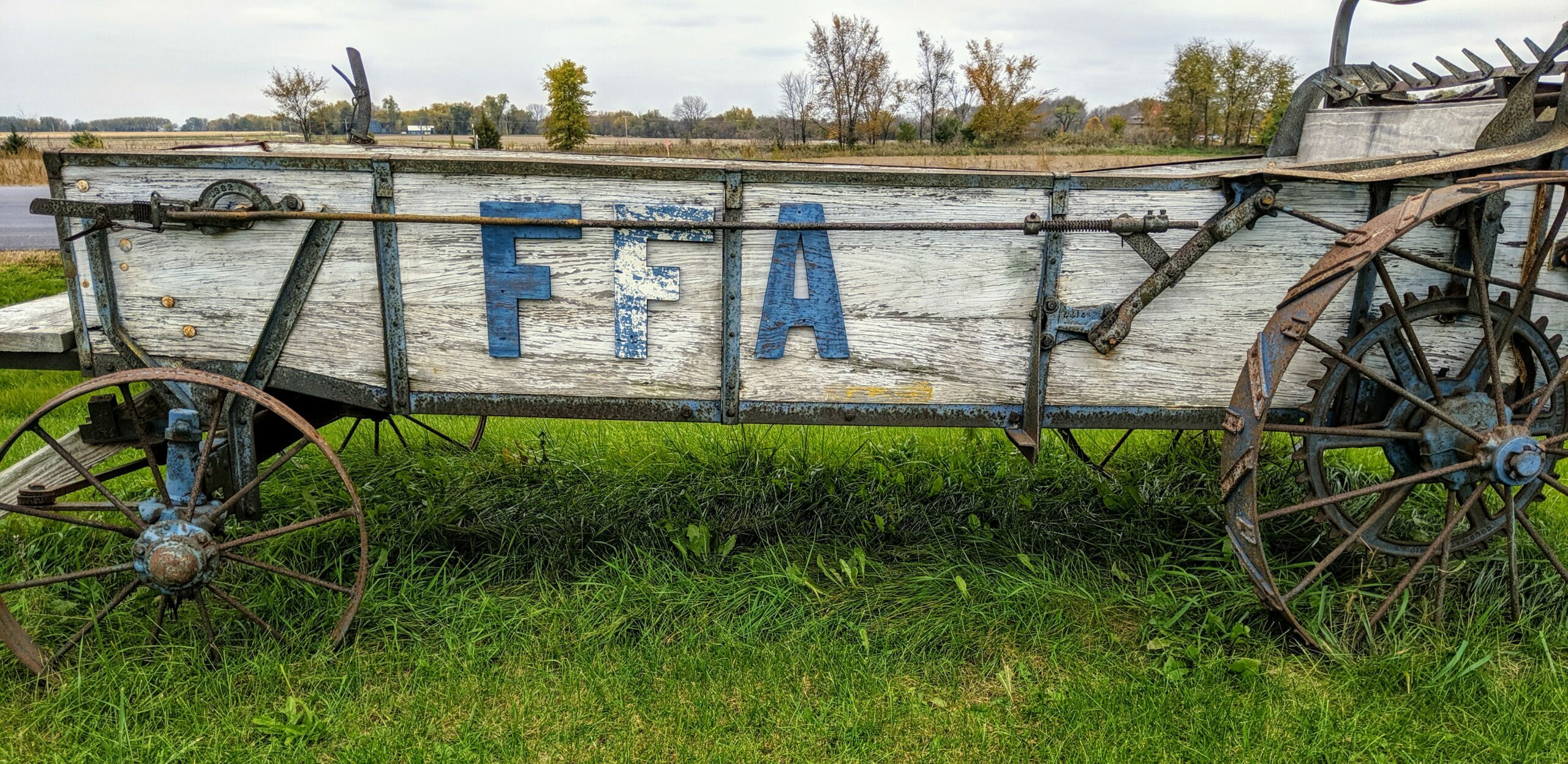
Like many school districts in Illinois, Hinckley-Big Rock has a rich history with providing students with authentic learning experiences through extra-curricular activities. With the understanding that such experiences can lead to deeper, more complex and longer lasting learning, ensuring that students learn through authentic problem-based units and lessons is a priority. Hinckley-Big Rock is furthering these efforts with a multi-year initiative to take advantage of the size of its property and expand the resources available for student learning on the working farm on the east side of the high school building.
Over the past couple of years, a small orchard has been planted and water and electrical have been added and/or upgraded. Next, a building will be added to support the fully functional agricultural operations in which students participate as part of their coursework and learning.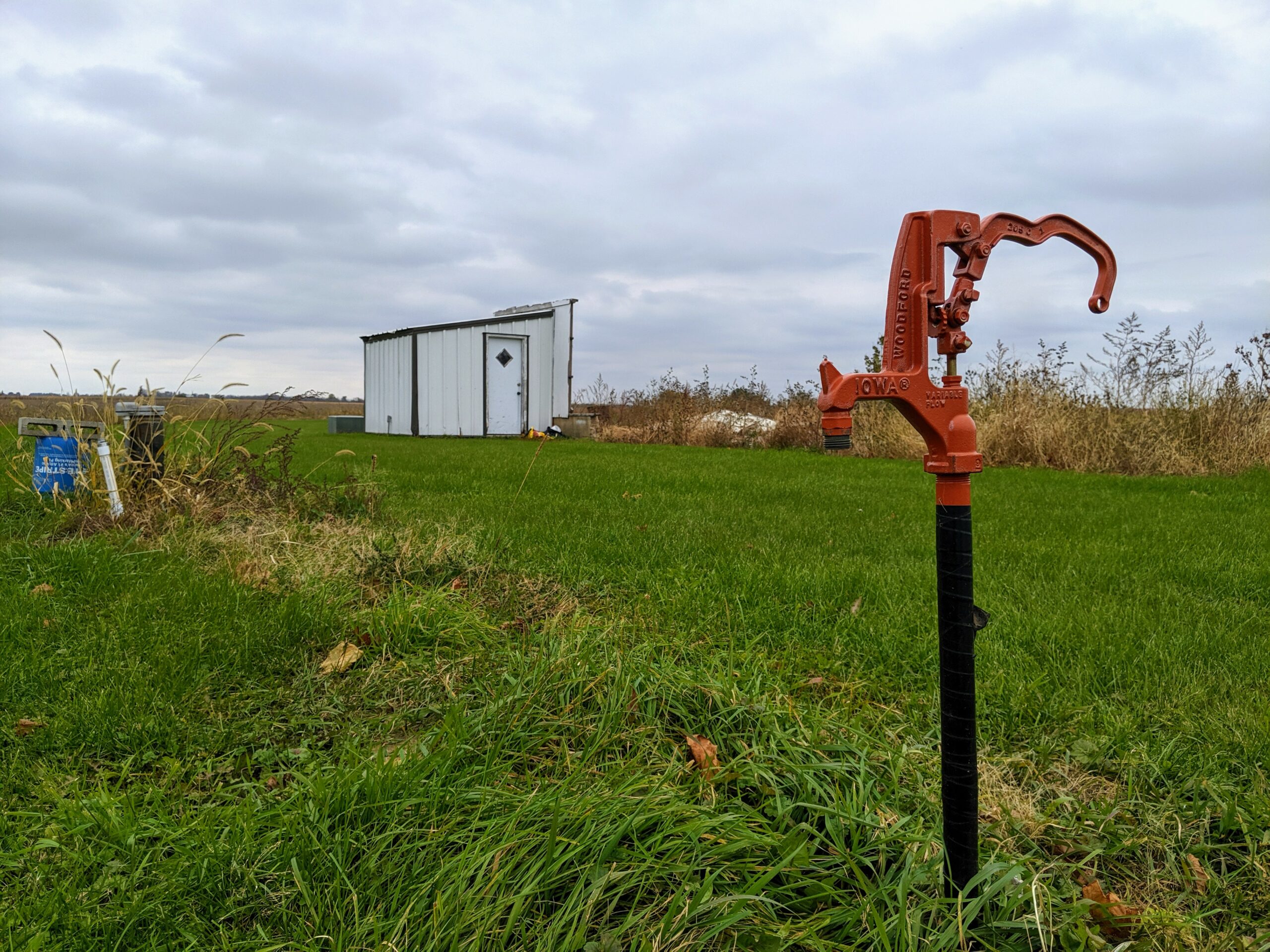
Being able to fully experience the work allows students to learn both career-specific knowledge and skills as well as develop the type of skills that are needed across careers as defined by the Cross-Sector Essential Employability Competencies (see page 6 of this PDF).
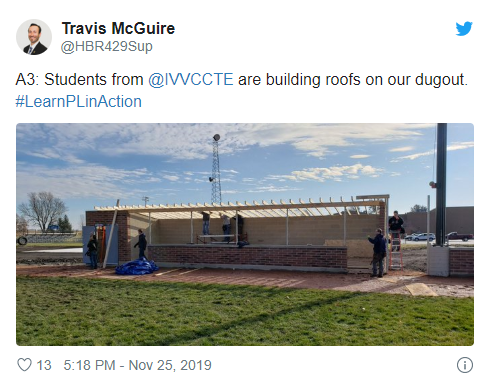
These efforts are not limited to just agriculture nor Career & Technical Education (CTE) courses at Hinckley-Big Rock, but they are also noticeable outside the building as Indian Valley Vocational Center CTE students also construct the actual dug-outs that generations of student-athletes will use for decades to come.
Rochelle – Mapping out success for the future during high school
Like other schools, Rochelle Township High School District 212 has embarked on a focus to ensure that all of its students are thinking forward beyond high school while they are still in high school. This effort is focused both on helping ensure that students know, understand, and have a variety of postsecondary options while also participating in significant and ongoing planning and counseling during high school.
At Rochelle High School, which is located about 20 miles directly west of DeKalb, Illinois, a series of key indicators for future success have been identified, and together these have been termed the Tomorrow Readiness Student Profile (pictured here below).
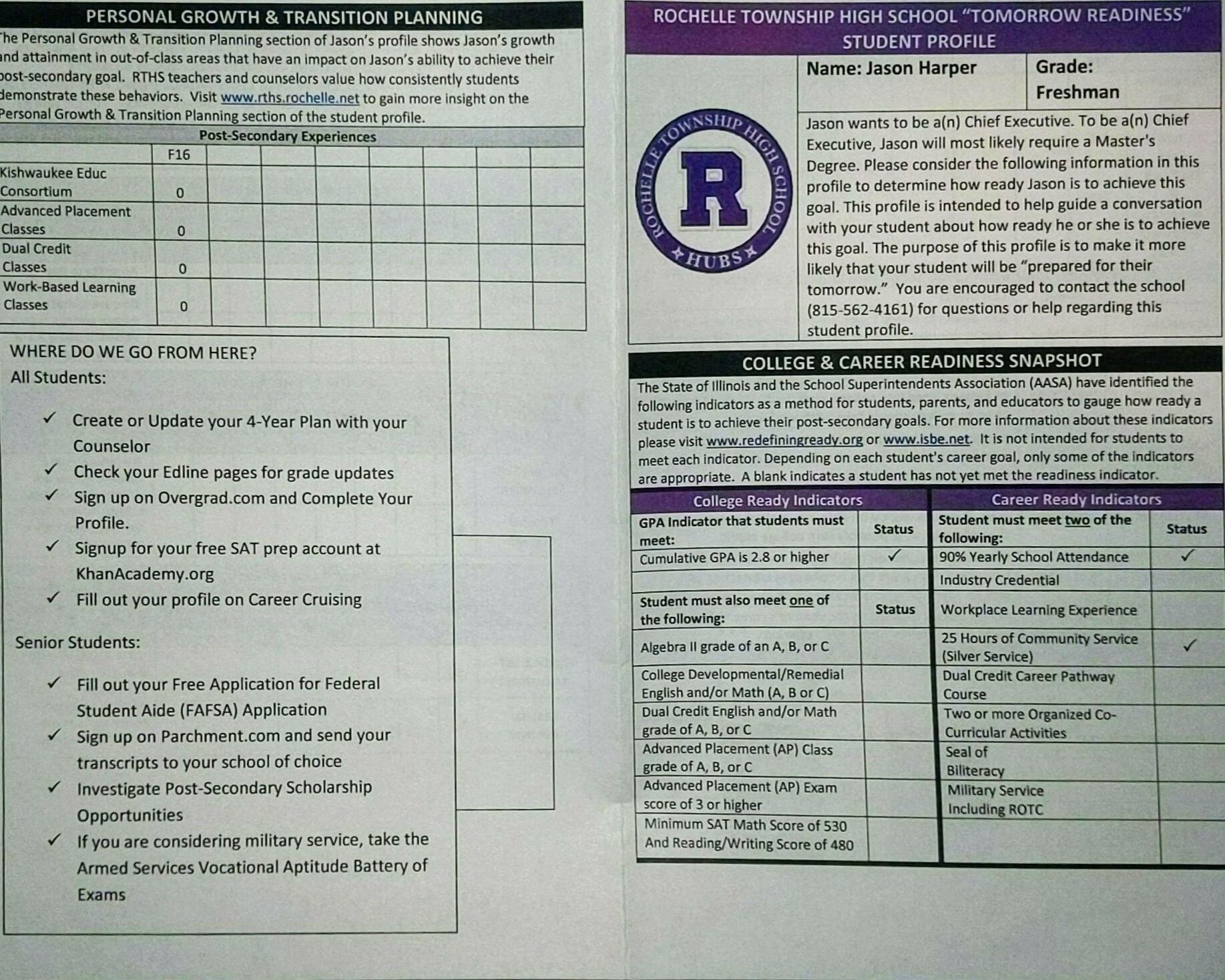
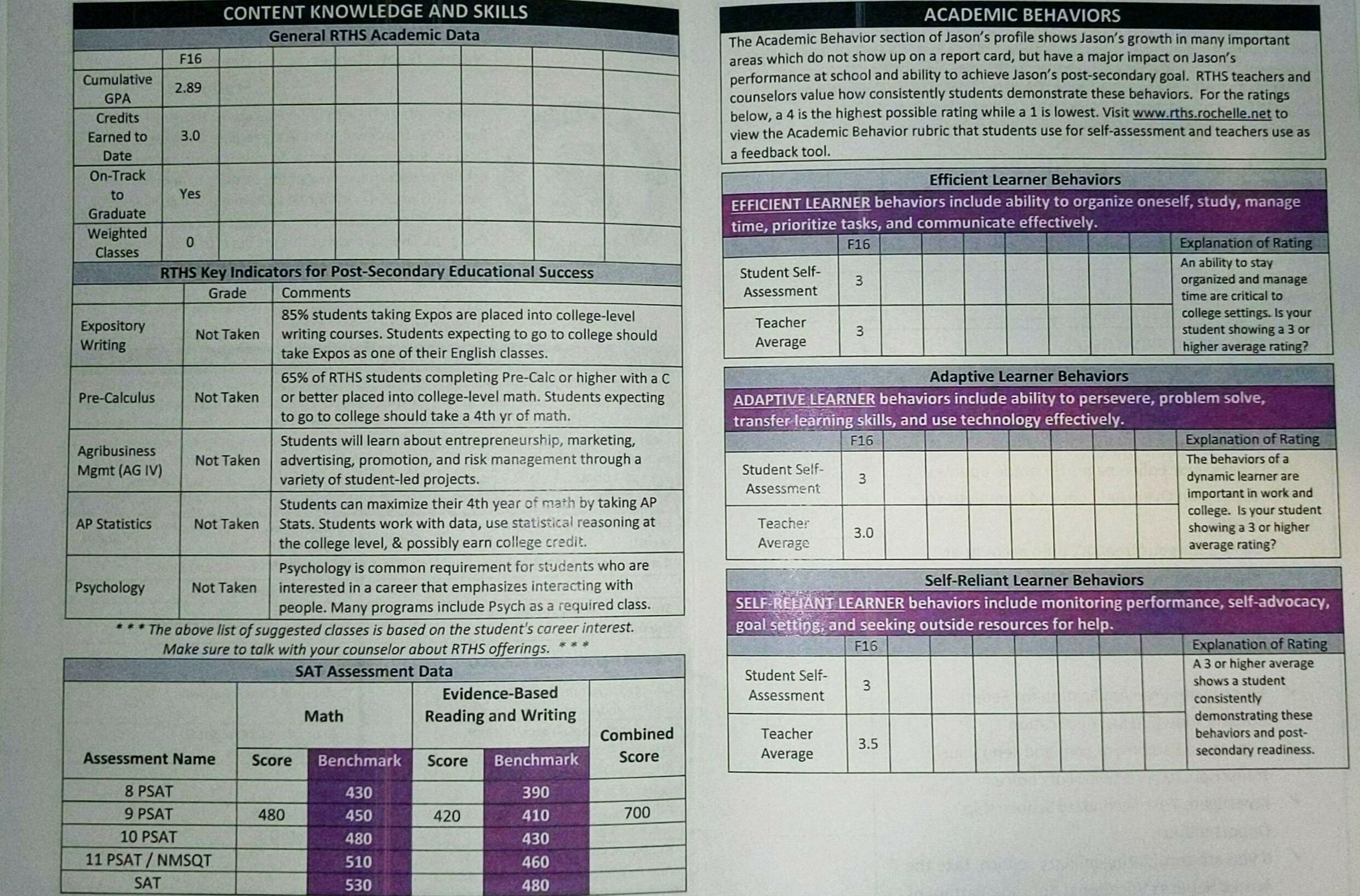
Following each semester, student information in the Tomorrow Readiness Student Profile is updated by school staff and shared with all students and parents. This ongoing education allows students and parents to keep up-to-date on their progress, and it has the secondary benefit of making the Tomorrow Readiness Student Profile a living tool in the lives of students and families.
Many schools and school districts are embracing the creation of a holistic view of a student that includes learning critical skills that go beyond traditional academics. For example, one way that these are now defined in Illinois as a result of the Postsecondary & Workforce Readiness Act is through both the Cross-Sector Essential Employability Competencies and the Entrepreneurial Competencies (see page 6 of this document). Rochelle has included these skills that are so critical for both careers and citizenship as the Efficient, Adaptive, and Self-Reliant Learner Behaviors. Where Rochelle goes one step further is by having teachers assess students in each of these areas and, most importantly, asking students to self-assess in each of these areas.
Alongside what courses a student has taken and their personal and career interests, the Tomorrow Readiness Student Profile provides a strong foundation on which students and their families, counselors, and teachers can engage in detailed discussions about both an individual student’s strengths as well as the target areas for additional growth during their high school experience and beyond.
October 2019